
Art Marketing Minute Podcast: Episode 5

In the Art Marketing Minute Podcast, you’ll learn how to sell your art, how to market your paintings, and everything else you need to know in order to have a successful art career. Each episode answers questions from artists by host Eric Rhoads, author of “Make More Money Selling Your Art,” publisher of several art magazines and newsletters, and author of ArtMarketing.com.

In this Art Marketing Minute: Advice for artists who have a difficult time with the sales aspect, and how you can get more people to buy your paintings.

Art Marketing Minute Podcast: Episode 5

Submit Your Art Marketing Question:

What questions do you have about selling your art? Email Eric today at [email protected] (include your name and where you’re from) to hear your question answered on an upcoming Art Marketing Minute Podcast.

FULL TRANSCRIPT of the Art Marketing Minute:
DISCLAIMER: The following is the output of a transcription from an audio recording of the Art Marketing Minute. Although the transcription is mostly correct, in some cases it is slightly inaccurate due to the recording and/or software transcription.

Announcer 0:02
This is the Art Marketing Minute with Eric Rhoads, author of the Amazon best selling book, “Make More Money Selling Your Art.” In the marketing minute we answer your questions to help your art career brought to you by artmarketing.com, the place to go to learn more about marketing. Now, here’s your host, arts magazine publisher, Eric Rhoads.

Eric Rhoads 0:23
Thank you Jim Kipping. And thank you for joining us today. My goal is to eliminate the idea of the starving artists. So let’s get right to today’s questions. And here’s a question from Minnie in Little Rock. I wonder if she’s married to Mickey? Yeah, I’m sorry. She probably heard that her whole life. I don’t think I should go there. Anyway. Minnie in little rock. Eric, I’m an artist and I met a little community gallery at a small tourism town nearby. We all volunteer time and some of the people in the gallery sell really well and I don’t seem to sell well at all And I’m not talking about my own paintings. They sell well with other people. People are selling them. But when people come into the gallery, I don’t sell anything, I’m just not selling well. And Matter of fact, I think I scare people off. And honestly, I gotta tell you, I hate selling because I don’t like being sold to have any advice for me.

Well, Minnie. Don’t do something that you’re uncomfortable with, unless you want to grow. Now, if you want to grow, it’s okay to get out of your comfort zone. If you’re perfectly happy where you are, stay where you are. But don’t try to be something you’re not. You have to ask yourself this. Why do you hate being sold to? What was the experience that you hated so much? That you decided you hated salespeople? I think it’s worth asking the question. And what is it about selling that you hate? Is it asking for money? Well, one thing you have to understand is that most of the sales that take place in the world are not unethical and not pushy and you don’t have to be pushy to sell. And so don’t assume that selling is a pushy Yeah, car dealers, whole nother animal. I don’t like that very much and but they’re even getting better. But the way to sell is not to try and manipulate. That’s not that’s old school. The way to sell is just to listen to people and ask them questions. Pull him in. If you see him asking about a painting, or you see him looking at a painting and staring at a painting, ask him about it. Instead of saying, may I help you? You know what the answer to that is? It’s just looking. So ask questions that are open ended, like, Tell me your thoughts about that painting. You seem pretty engaged in it. Don’t ask, Do you like it? You’re going to get a yes or no. And then when they tell you their thoughts, ask them more questions. So they say well, you know, I really like the colors. There’s a thing you can do called mirroring. And all you have to do is repeat something they said and you can actually keep somebody talking for a long, long time and that will open Been up more and more the more you do it and and you may feel like you’re manipulating and you’re really not you’re just trying to keep the conversation going. So mirroring is like they say, Oh, I like the color. You go, huh? The color Tell me about that. And then they’ll go well, you know, I really like the reds and the blues and the greens and I really really, really like the glow of the mountain in the way that you know, this artist made the water sparkle on the water. You said What is it about that sparkle that turns you on? Oh, well, I don’t know. You know, it reminds me of when I was sitting on a boat with my grandfather when I was a kid. We were fishing and I remember the sun came up over the mountain and my grandfather was catching the fish and I was just mesmerized by the sparkle in the water it’s kind of hypnotic. Well, all of a sudden they’ve opened up they’ve told you something cool about themselves. So just, you know, ask people to keep talking and and don’t push you don’t have to be pushy. sellings. Not pushy, right? You just want to help people find things sometimes they don’t know to find them on their own. You got to help them, help them discover what they like, and help them understand that it would be a cool thing to own this. Well. That’d be nice if you had that sparkle in your living room. And it reminded you of your grandfather every time you walk by it. I mean, is your grandfather around anymore? No, I mean, wouldn’t that be cool? And you know, that’s kind of what selling is. It’s not anything more than just being honest with people and letting them talk.

Next question comes from Juliana Clara, in midvale, Utah. So Juliana says, Eric, how can I get more people to buy my paintings?

That’s a loaded question Juliana. And it’s a broad question. So I’ll give you a broad answer. Because, well, first off, you want to get your paintings in front of more people. The first thing that painters need to do to sell paintings for the first time is to get used to being out there get used to putting your paintings in front of other people. So you got to make sure you’re ready and it just takes a little time to get used to it. So first off, get some outside objective advice. Are you ready to sell your panics, maybe somebody will give you some advice on what you can do to improve now my brother in law Scott is a painter and he brings his paintings to work with him to show his coworkers. And He never says there for sale. He never talks about it, but they always end up buying them all. And or they end up commissioning him to do things. He’s not selling them for a lot of money doesn’t need to but he, he’s like, yeah, sure I’ll take 100 bucks for it or 200 bucks or 500 bucks, whatever the number is. And he takes him with him everywhere he goes. So he was going to the chiropractor and he took some paintings and he said, Hey, Boston’s going to show you what I’ve been doing. And it shows them the paintings and the guy says to him, yeah, I’m opening a new office, could you make me some big ones? And he said, Sure. He said, What do you need? He said, he ordered 16 of them. So just kind of put yourself out there, get used to that. Take him around. I take paintings with me to the dentist. I take paintings with me to the doctor, I took my magazines I take sometimes I take my videos, I take all kinds of things, because I really am just trying to make them remember me and help them remember that I’m a little different than the other 530,000 patients that they See? And then you know, if I forget to bring a magazine or something, sure enough there go, where’s that magazine? So you know, you could take paintings that I’ve taken paintings into the dentist with me and not not to sell them, but just to show them. And so I think that’s kind of cool. It just makes you stand out. So that’s kind of what marketing is all about Juliana is it’s just trying to get people aware of you. Once you get into the level where you want to go a little deeper, you want to start selling nationally or selling more in your community. There’s a lot of other answers as a lot of things like, you know, do you need a website or not? You know, a lot of people are debating that today. I think obviously, it’s a good idea. But a website alone isn’t going to bring you any business. You got to figure out how to get people in there. You got to figure out how to get people to respond. So that’s what I talked about in some of my other stuff by books and videos and things, but I hope this has been helpful. Well, this has been the art marketing minute with me, Eric Rhoads. My goal in life is to eliminate the idea of the starving artist and to help your dreams actually come true. So if you want to submit questions, Simply email Eric@art marketing.com. And to learn more about marketing ideas, you can visit Artmarketing.com. Thanks for listening.

Remember to Submit Your Question: What questions do you have about selling your art? Email Eric today at [email protected] (include your name and where you’re from) to hear your question answered on an upcoming Art Marketing Minute Podcast.
By |2022-12-14T16:50:09-05:00March 2nd, 2020|Art Marketing Minute Podcast|0 Comments

Art Marketing Minute Podcast: Episode 4

In the Art Marketing Minute Podcast, you’ll learn how to sell your art, how to market your paintings, and everything else you need to know in order to have a successful art career. Each episode answers questions from artists by host Eric Rhoads, author of “Make More Money Selling Your Art,” publisher of several art magazines and newsletters, and author of ArtMarketing.com.

In this Art Marketing Minute, you’ll learn how to build your confidence if you feel as though you’re “too shy” to begin selling your art and why it’s important to go to (and network!) at painting events.

Art Marketing Minute Podcast: Episode 4

Submit Your Art Marketing Question:

What questions do you have about selling your art? Email Eric today at [email protected] (include your name and where you’re from) to hear your question answered on an upcoming Art Marketing Minute Podcast.

FULL TRANSCRIPT of the Art Marketing Minute:
DISCLAIMER: The following is the output of a transcription from an audio recording of the Art Marketing Minute. Although the transcription is mostly correct, in some cases it is slightly inaccurate due to the recording and/or software transcription.

Announcer 0:02
This is the art marketing minute with Eric Rhoads, author of the Amazon best selling book make more money selling your art. In the marketing minute we answer your questions to help your art career brought to you by artmarketing.com, the place to go to learn more about marketing. Now, here’s your host, arts magazine publisher, Eric Rhoads.

Eric Rhoads 0:23
Thank you, Jim Kipping. And thank you for joining us today. My goal is to eliminate the idea of the starving artists. So let’s get right to today’s questions.

Here’s a question from Chuck in Atlanta. Chuck says, Eric, I want to sell more. But I’m overwhelmed by all the things I should be doing. And frankly, I’m not sure if I can even ask somebody to buy my paintings. I’m kind of shy.

Well, Chuck, you’re not so shy that you wouldn’t ask the question. So that’s a good start. You’re not alone. But you have to ask yourself if being shy is serving you or it’s getting in your way. I’d say The best thing you can do is start out to seek ways to build some confidence, and maybe get you comfortable with selling your own art. Now, this is going to be hard to believe for you. But I was a complete introvert, very shy, very afraid to speak to people one on one, and never get in front of a group. And yet today, I’ll stand in front of thousands of people and be silly and feel comfortable with it. And I learned how to do this by some of the things I’m going to tell you to do. One of the things I’m going to tell you to do or suggest anyway, to build confidence, join Toastmasters club, they have one in every town, and Toastmasters really teaches you how to speak in front of other people. I was mortified. I went and I didn’t want to go. My palms were sweating. I was just like freaking out that I was gonna have to talk to people. And they made everybody kind of stand up and do 3030 seconds on who they are and what they do. And that was pretty tough. And then you know, they just do it every time and everybody gets a chance to speak and they teach you how to do it. And by the end of the time there I was like I could have stood up In front of that whole thing and done somersaults, I was so so happy with it. So that’ll help you. I’d also suggest a Dale Carnegie course on how to win friends and influence people, it’s a good way to learn how to be around people. And they also do a sales course, you might want to take that. So anyway, keep that in mind. And remember, sales is not what it used to be there. You know, there used to be old school sales techniques that were sleazy. But you know, today, it doesn’t have to be that way. You know, some of the car dealers still operate that way, but most of them don’t. And so you want to do things that basically are helping people discover what they want, helping them discover how to get what they want. And these courses will help you see the world through a different lens and help you get out of your comfort zone. And we all have to get out of our comfort zone to grow a little bit. If you do these things, you’ll pull yourself out to some new behavior and get rid of the behavior that’s not serving you. I didn’t want to be shy but I was painfully shy and I just you know, I didn’t know how to overcome it. somebody suggested these things to me and I did them. And you’re very capable of helping yourself. If you do something, but you gotta take action to do it today. Don’t hem and haw around about it. Just do it, pick up the phone and do it.

Next question is from Dawn in Pasadena, California. I love Pasadena. I’d like to live there. Mr. Rhoads, I watched one of your video interviews and you talked about the importance of getting out to events and meeting people and how it can help your career. Can you tell me more about that?

Sure. I can Dawn But first off Mr. Rhoads is my grandfather. Call me Eric. I’m not big on formalities. Have you ever heard of the artist Charlie Hunter? Charlie’s become pretty well. Well known pretty famous these days. Charlie had come to my paint camp in the Adirondacks, the Publishers Invitational I think it was the first year about 10 years ago. And though he was very outgoing, personally, he was very insecure about his painting and he had never been part of the planner community and had hardly even painted outdoors but Because we all bring our paintings in at night, everybody looks at them, we all started noticing how good he was. And he started building confidence. I noticed him too. And I gave him my two cents worth about his paintings and that I loved him. In fact, I have three of them right here in the studio, the podcast studio that I bought from him that week. And I’m glad I did because they’ve gone up in value tremendously anyway, not that that’s why I … my paintings. But I ended up doing an article about … starting to get invited to painter events. And then he started winning awards, and now he’s famous and he’s selling a ton of work. His workshops are in high demand, and he’s a rock star. And that all kind of started because he got himself out there. Now I’m not suggesting for a minute that I did this for him. He did this by taking a chance putting himself out there putting himself at risk. And he built confidence from others. He got feedback, he learned the ropes of the planner world and met a lot of people, made a lot of contacts and made his career happened. Actually, Lori Putnam did the same thing by coming to the first plein air convention. She couldn’t even afford to go but she decided she needed to be there and she got there she got notice kept coming back. Of course she’s very famous now. And I just saw a young guy at our fall color week up in Canada recently. And his name is Jed and Jed came to fall color week I noticed everybody was marveling about his paintings, and he does acrylics and they’re beautiful. So the event gave him some exposure to the crowd and gave him some confidence resulting in some things happening in his career. And I even ended up putting them up on the faculty for the acrylic at plein air convention. So I think it’s a pretty cool thing to do stuff like this getting out there is really important. It doesn’t have to be one of my events. Doesn’t have to be a planner magazine event. It can be anywhere painters gather but you want to get out there get to know people have them get to know your work, help you build your confidence, learn the ropes, and you got to take a little risk to make progress. You’ll make friends that will help you along the way because no man or no woman is an island right? I hope this helps. Anyway, that’s Not so much direct marketing or advertising advice, but these things are important in marketing, so I thought this was a good time to put those questions in there. Well, this has been the art marketing minute with me. Eric Rhoads. My goal in life is to eliminate the idea of the starving artist and to help your dreams actually come true. So if you want to submit questions, simply email [email protected]. And to learn more about marketing ideas, you can visit Artmarketing.com. Thanks for listening.

Remember to Submit Your Question: What questions do you have about selling your art? Email Eric today at [email protected] (include your name and where you’re from) to hear your question answered on an upcoming Art Marketing Minute Podcast.

By |2022-12-14T16:50:08-05:00February 24th, 2020|Art Marketing Minute Podcast|0 Comments

Art Marketing Minute Podcast: Episode 1

In the Art Marketing Minute Podcast, you’ll learn how to sell your art, how to market your paintings, and everything else you need to know in order to have a successful art career. Each episode answers questions from artists by host Eric Rhoads, author of “Make More Money Selling Your Art,” publisher of several art magazines and newsletters, and author of ArtMarketing.com.

In this Art Marketing Minute, you’ll learn a quick tip on where to start if you’re not selling art online yet, and specific ways to help your gallery sell your paintings.

Art Marketing Minute Podcast: Episode 1

Submit Your Art Marketing Question:

What questions do you have about selling your art? Email Eric today at [email protected] (include your name and where you’re from) to hear your question on an upcoming Art Marketing Minute Podcast.

Related Links:
– Sunday Coffee: https://coffeewitheric.com/

FULL TRANSCRIPT of the Art Marketing Minute:
DISCLAIMER: The following is the output of a transcription from an audio recording of the Art Marketing Minute. Although the transcription is mostly correct, in some cases it is slightly inaccurate due to the recording and/or software transcription.

Announcer:
This is the art marketing minute with Eric Rhoads, author of the Amazon best selling book make more money selling your art. In the marketing minute we answer your questions to help your art career brought to you by art marketing. com, the place to go to learn more about marketing. Now, here’s your host, arts magazine publisher, Eric Rhoads.

Eric Rhoads:
Thank you Jim Kipping. And thank you for joining us today. I am here. My goal is to eliminate the idea of the starving artists. So let’s get right to today’s questions. Here’s a question from Carrol in the Sierras. I guess that’s the highest year is California, huh Carol? Welcome. I’m at a crossroads regarding my art. It seems that I’m throwing good money after bad. I’m not a rank beginner. However, I thought that I should check everything and start again from scratch. Here’s why. About five months ago. I got my own website in that five months I’ve had only 10 people look at the site, and no buyers, I do not in most cases seem to be able to tell which my paintings are the better ones. I’m quite discouraged at this point. The art ship may have already sailed for me. I have no clients. I have no client list. I don’t know anyone who would buy my art. Help.

Carol, you sound desperate, my dear goodness. Don’t give up. Don’t ever give up. Never ever went to Churchill said don’t ever ever, ever, ever, never, never, never, ever give up right? paid first because you’ll love it if you paint because you love it. That’s a good starting point. If that’s not the reason you’re doing it, maybe that’s something you shouldn’t be doing. But I have a hunch you can do it because I looked at your website and your paintings are pretty good. And so look at it from this standpoint, if it sells its icing on the cake. Now if you have to make a living as a painter, just know that it takes some time. You have to devote time and energy into building it. Now I put together a thing for people that are interested in senior years retiring and so on, it’s kind of about how to start up fast and so on. I don’t remember the name; it’s of one of my videos. Anyway, there’s some stuff in there that talks about how to speed up the process. But the reality is that if you have a website that doesn’t guarantee you’re going to get any visitors, you had 10 visitors, that’s not necessarily any visitors, right? So you’ve got to look for ways to drive people and drive traffic to your website, and that’s going to require some marketing effort. You can get some free advice on my marketing blog. There’s a lot of stuff on there about driving people to websites and how to get people to do it. Sometimes it’s advertising, sometimes it’s social media, sometimes it’s direct mail, sometimes it’s other things but you just kind of be constantly driving people to the website. And or looking for other people to sell your work for you. Your work is pretty good. It should be in a gallery and you should probably start doing that process. I again, I have a whole process and some of my videos where I go through that but you want to get introduced in are invited in not not so much going after him because everybody else’s going after me, I want to be different. You want to see how you can get invited and I’ve got a whole strategy on that. And that involves getting the word out to other people through people that are connected to the gallery. So more on that at another time anyway, don’t give up. Don’t get discouraged, you’re going to be fine. And just hang in there. Everybody goes through this. This is not unusual.

Next question is from Jo Ann and Lincoln, Nebraska. Congratulate me. I just got into my first gallery. Well, Joanne, congratulations. But so far, they’ve not sold anything yet. I know there’s some great painters in the gallery. So what can I do to help my painting sell?

Well, Joanne, the fact that you got into a gallery, you’re one of a very few and so congratulations on that. The fact that they have other great painters in the gallery means they have good taste, and they picked you so I wouldn’t worry too much about that. trust them. It’s going to take them some time. They have to build a collector interest in a collector base and it might take them some But you can help them in a lot of ways. But the first thing is, ask them what you can do. It’s surprising to me how many people never asked that question. So ask the gallery owner, ask them, you know, how can I help you? Secondly, there’s some things you could do. It just depends on how far you want to go. First off, you can talk about the fact that if you’ve got your own list, if you’ve got your own newsletter, if you’ve got your own social media accounts, you can talk up the fact that you’re in the gallery and put these paintings out there that are in the gallery and drive people to the gallery. That’s something you can do. It’s not all up to them. Marketing is a cooperative effort. Speaking of cooperative, one of the things you can do is what we call Co Op advertising. You can actually share in the expense, you can go to them and say hey, listen, I’d like you to advertise my work. And I think it would be great to be exposed and have my name associated with your gallery. I’ll pay half if you’ll pay half. And so that’s one good way to do it. A lot of people do that kind of thing. You can ask permission to talk to the sales team asked for a conference call and ask. Tell them your story. Make it about your story and how you got where you are and what you do and what your thoughts and philosophies are. Keep it interesting, because the sales team, whoever is selling your paintings, sometimes it’s just the owner. But maybe they need to know about you and don’t assume they’re going to read anything about you make it easy for them. I like to give stories with my paintings stories help sell, I like to write up a little story about every painting, put a little bit of fantasy and a little bit of reality in it. And then I I paste that on the back of the painting, sometimes I’ll mail it to the galleries. And then they like to sometimes put it up on the placard underneath the name of the painting and the cost because it gives a little story creates a little interest. And by the way, very few people do story so you’re going to stand out, and stories oftentimes help sell. So I got a whole thing on stories in my first and my second videos and so you might check those out. Keep the gallery informed, tell them what you’re up to anything new. If you’re taking trips, traveling, painting entry, interesting things. If you’re on the faculty at a flare convention or something like that, tell them because it gives them stuff to talk about. They need stuff to talk about when they’re talking about you. keep them informed. You know, it’s amazing how many artists don’t keep them informed. But don’t overdo it. Don’t badger them because they’re busy people and be grateful, you know, they’re going to want to help people who are grateful. And so rather than calling and saying, Why didn’t you sell my paintings yet? Instead, what you want to do is say, Hey, thank you. I appreciate all you’re doing. I’m really grateful for you guys. Because people when people are nice, they want to help them right. Anyway, that’s some marketing advice. I hope it’s helpful.

Well, this has been the art marketing minute with me. Eric Rhoads. My goal in life is to eliminate the idea of the starving artist and to help your dreams actually come true. Thanks for listening.

By |2022-12-14T16:50:07-05:00January 28th, 2020|Art Marketing Minute Podcast|3 Comments

What to Do if Your Art Stops Selling

Last week an artist told me he was suffering. His sales were way off, and the steady income he had become used to had suddenly come to a stop. He also told me his galleries were not selling much of his work anymore.

I asked him what he thought the problem was, and he told me he is doing everything he can to generate income … more workshops, working on a book, working on a video, getting into more plein air events, doing an online mentoring program and an online school, and trying to schedule some gallery shows.

As I probed this with him, I asked which came first … all the activities or the slump in sales? His answer was no surprise. “I was doing really well and hardly had to do anything to sell paintings, but I wanted to make more money, so I started working on these other projects.” When I asked him if he was painting as much and sending as much to the galleries, he said, “Well, no. I don’t have as much time.”

This is going to sound absolutely counterintuitive, but less is more.

The disease many of us have is thinking we have reached a peak with our income and that therefore we need to start doing new things to bring in more money.

An example is my buddy Jim. Jim owns a coffee pot business. It’s a pretty big business. He has pots made in China with his brand, and he sells them on Amazon. He has made a lot of money, but when we last met, he told me he was getting out of the coffee pot business and getting into the vitamin business. 

Why? Pots had stopped selling as well, and he sees lots of people making a lot of money in vitamins. 

The grass is always greener. Someone else looks successful doing other things, yet we forget that when we do new things, there is a tremendous learning curve, time to understand it, and often it’s not naturally in our skill set. Someone else might be successful, but we don’t know how many decades of struggle they went through to get there, or how much money it cost them to start.

Any time you start chasing shiny objects, you suffer somewhere else. I should know. Success magazine called me the “Shiny Object King,” and it was not necessarily a compliment, though their point was that some shiny objects turned out to be better businesses than what I had.

As an artist selling art, you are a small business. All businesses have up and down cycles. Sometimes those downs are caused by the economy, sometimes they’re caused by a change in the industry or business, sometimes they’re impacted by events like the California fires or election fears. Sometimes we don’t know.

Something I do know: In Ecclesiastes it says there is a time to reap and a time to sow. I find that when business is off, we have to put the shiny objects aside and protect our core business. 

My friend Jim is giving up because he is in a down cycle and moving to something else, forgetting that startups are hard. I think that instead he needs to keep his head down and stay completely focused on solving the problem.

We all love to place blame. It’s a lot easier to place blame on other people, or other things or conditions. But my friend Jim is to blame for his own problem, as is the artist who got so distracted by shiny objects he failed to protect his core business. 

There are two issues with shiny objects. First, they are a distraction. Second, they send signals to the market. With social media, people know everything. This artist used to post paintings and thank customers for buying, but for the past year or two, all of his posts have been about his shiny objects. That’s sending a signal to his market that he’s bored with painting and has moved on to other things. I’ve been seeing this a lot lately.

There is no problem with wanting more income, but you want to start with this question…

If I focused more energy on my existing business, could I find a way to grow it to the level of income I want from all my other shiny objects? The answer is yes, and if you don’t know how, all you have to do is find out. There are plenty of experts out there to help.

What if, right now, you had every customer you’ve ever had?

Most people buy one painting from you. But what if 50 percent of the people who bought one painting from you bought one painting a year? Would that change your income? Of course.

The solution to every problem is found in a series of questions. If you ask great questions, and you try to come up with 50 answers for each question, and don’t just pick the first few easy answers, you’ll solve any problem.

The same day this artist told me that nothing is selling, his friends aren’t selling, and he thinks we’re in a bad economy, another friend told me he sold more art this year than any year in his career and that a lot of his friends were thriving too. Hmmm.

Lots of artists I know are coasting and in the danger zone. 

Some things to consider if things are not going as they should:

  1. Am I as focused as I should be?
  2. Am I doing all the things I have normally done to keep business strong?
  3. Am I too reliant on others for my income? Should I control it more?
  4. Am I being distracted by shiny objects?
  5. If I could pick only ONE thing to work on for the next two years and could not work on any other thing, what is that one thing?
  6. What questions should I be asking myself? (There are probably dozens.)
    1. How have things changed, and what do I need to be doing differently?
    2. Has my worked changed, and do people want it?
    3. Is my work still relevant? 
    4. Is my category of art still hot?
    5. What could I do to get income out of past buyers?
    6. Am I sending bad signals to the market?
    7. Am I willing to work as hard?

If or when you see things changing, get focused on solving the problem and keep your head down. A concentrated effort can make a huge difference toward solving any problem.

By |2020-01-21T11:57:21-05:00November 1st, 2019|Business Advice for Artists, Selling Your Art|0 Comments

How to Destroy Customer Relationships in Four Words

Just four little words can turn a happy customer into an unhappy customer. These words, when uttered, send a signal that you don’t care about your customers and that your business is screwed up.

These four little words wound customers and tell them you won’t do whatever it takes for them. They also say you hate your job, hate your company, and are very self-centered.

What are they?

“It’s not my job.”

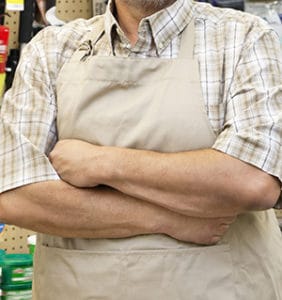
I was mortified when I was in a grocery store recently; I asked a question, and the man I approached said, “It’s not my job. I don’t actually work for the store, I work for one of the vendors.” Yet he had a store apron on.

The right response might have been, “I’d be happy to help you. Even though I don’t work for the store and I work for a vendor, let me take you to someone who can answer that question.”

You may, in your company or business, have employees who have very distinct roles. In fact, if they encounter a customer who asks them to do something, it may not be their job.

The problem is that if the employee says that, it makes the customer feel unimportant, unheard, and as though employees are unwilling to help. And that sends a devastating message about company management.

The correct response is always, “Yes, how can I help you?” or, “I’d be happy to help you.”

Everyone on the team needs to know that every customer pays their paycheck and that when customers have a negative experience with your company, they’re likely to tell 10 people, who may each tell 10 more people. Suddenly you’ve lost customers, and you may not even know why.

“It’s not my job” leads to “I’m outta work.”

Smart companies need to coach their team to always do what it takes, never pass the buck, to help whenever possible or find someone who can help. Management should also make it known that if they hear of someone using those words, that person will probably be working elsewhere soon.

Treat people the way you want to be treated.

By |2025-05-14T07:06:35-04:00March 9th, 2018|More Advice for Artists|0 Comments

How You Can Sell More Artwork by Becoming a Celebrity Artist

2


Artists are always asking me how to sell more artwork, how to get their prices up, and how to become more successful. Usually they assume that they will improve their income if they improve their painting skills, but after a certain point, that’s simply not true. It’s no more true than a great restaurant’s improving its recipes a little bit more and thinking that means it can raise prices and sell more food.  


I learned a critically important lesson at a young age, when I started writing a column for the radio magazine I had just founded. I went from being a complete unknown to being somewhat well-known within a year, and each year, as my exposure grew, I saw my business grow in proportion to the awareness created. Then when I released my first book, awareness grew even more, expanding beyond the industry to some small level of consumer awareness because I’d been on national network TV and the Home Shopping Network for my book, and on hundreds of radio shows and in over 400 newspapers. It grew even further when the TV show Newsradio wrote an episode about me and my radio magazine (you can see it here). The more my perceived importance grew, the more my business grew.


If I were to ask most Americans to name a famous artist, they would probably say Monet or maybe Norman Rockwell, or even Thomas Kincade. If I asked them to name a famous living artist, I’m not sure what names I would hear. Unless they are tuned in to the art world like we are, they probably wouldn’t mention people we consider icons today. Those artists are famous within the circle of artists, but are not famous to most Americans.


Consumers are drawn to importance and celebrity, not necessarily because celebrities are better at a particular skill than someone else (other than PR). I still cannot tell you what Kim Kardashian is all about, but her fame is making her extremely wealthy. Money is drawn to celebrity and importance. People will wait in line to spend money at the restaurant of a celebrity chef like Wolfgang Puck, when the food next door may be equally good at half the price. It’s true of all things. Celebrity sells.


Most art dealers will tell you that sales in the art world are frequently driven by perceived importance. Either a consumer will visit a gallery because that gallery handles a name they already perceive as important, or they will be swayed to purchase based on statements like “This artist is hot.” “This artist is getting critical acclaim.” “This artist’s prices are soaring.”


Though most artists want to believe that quality will outshine brand name, that is very rarely true. Brands outsell non-brands. And brands are built by constant exposure over decades, usually intentionally and with non-stop advertising, but occasionally simply due to “showing up,” being frequently seen over a long period of time.


Importance and celebrity not only help sell artwork and increase pricing, they operate like a perpetual-motion machine. The more you are perceived as important, the more you sell and the more you’ll be invited to the right events. And, of course, the more that happens, the more your celebrity increases.


The process of branding is somewhat complicated, and there are a lot of elements to doing it well, but it is indeed a process, and it can be achieved through advertising and publicity. I’ve watched unknowns become well-knowns in a few short years because of it. Most collectors won’t think of what you’re doing as paid brand-building because in art magazines, the ads tend to be perceived as part of the content.


The strength of your sales and collectability are directly tied to the strength of your brand and your perceived importance or celebrity. Brand in art is really about trust (“Is it good?” “Is there critical acclaim?” “Do other collectors like it, and are they buying it?” “Are prices going up?” “Is it a good investment?”) Trust is built in branding much as it is built with new friends. It requires a lot of time together for people to come to know and trust someone new. The more you are seen, the more comfortable they become with you, and the more you gain their trust. That is the essence of celebrity-building.


There are four kinds of celebrity: local, niche (e.g., art collectors) national, and worldwide. For some, being the best-known artist in their town is enough to fuel their sales. For others, it’s about being nationally known, either by a niche group like art collectors or by all consumers — something that, of course, is harder and more expensive to achieve. And of course there is worldwide awareness as well. All are possible, based on the amount of effort you are willing to expend, but few artists become important without making an intentional effort. All the celebrities I know started with orchestrated PR efforts, advertising, and by doing something that got them a lot of attention fast. Stunts are a powerful way to get people talking about you. Do you think the feuds between Donald Trump and Rosie O’Donnell just happened? Probably not. It was invented by some great PR expert.

Consider what you can do to build your brand, your celebrity, and your importance. It rarely happens overnight, and it is a beast that dies if it’s not constantly fed. That’s why celebrities always want the press writing about them. Out of sight is out of mind. Building your perceived importance, and therefore your brand, will have a huge impact on your career.

By |2019-01-14T16:17:18-05:00September 17th, 2015|Branding for Artists|2 Comments

Christmas In July: A Money Tree for Artists


SantaSkis
Want to Make Some Christmas Sales This Month? This story gives you a step by step plan.

Santa on water skis? Yes, I admit to doing it. In the 1980s, I owned a radio station. I had just taken it over and needed to bring lots of attention to it. So I invented the “Summer Santa” promotion. I had learned that our news director played Santa at Christmas time to make a couple extra bucks. He already had a suit. He already had a belly full of jelly, a jovial laugh, and a Christmas-like spirit. It was an instant promotion, and it was easy. Spot the “Summer Santa,” recite a phrase about the station, and win a Christmas gift in July. We took “Santa” everywhere, including the lake where everyone was spending time on July 4th. And yes, he did actually water ski in the Santa suit. I know because I drove the boat. Have you ever seen a wet Santa? It’s quite a sight.


Eric, Are You Suggesting I Do a Christmas in July Promotion?

No, not exactly, though there are some elements you can employ to get attention.


Money Does Grow on Trees
Instead we’re going to do something really Christmas-like together. Money does grow on trees, and we’re going to plant a money-making Christmas tree in July. Are you in?


Everything in marketing starts with a seed. Plant a seed, nurture and water it, expose it to sunlight, watch it grow and blossom, and it grows money.


Getting Early Attention from Christmas Shoppers
What does everyone do around Christmas time? They sell like crazy, they promote like crazy, and it is darned near impossible to get anyone’s attention at Christmas to sell something. So we’re going to get them thinking about a Christmas gift in July, when they're not thinking about Christmas.


Now I’m presuming that you’ve already got a list of previous buyers. If you don’t, this won’t work.


A Step By Step Plan You Can Do This Week To Stimulate Business
Here is the move. Ready?


You write a Christmas letter. You can make up your own, or you can copy mine. You mail it out to your list and wait for the magic to happen.


Oh, and the critical thing is that you send it to the spouse or partner of your buyer. For instance, if the one was the one who loved and bought the painting, send the letter to the other. If they both bought the painting, send it to one of them. Note, I did not say e-mail this. I want you to use mail. E-mail is too easy to delete.


Step 1. Get a red mailing envelope. Put your name in the return address area. Put these words on one side of the envelope: My First Annual July Christmas Letter. Open immediately.


Step 2. Enclose a candy cane. It makes the envelope lumpy and creates curiosity. You may want to wrap the packaged candy cane in some foam or paper. People cannot opening resist a lumpy envelope.


Step 3. Get some Christmas letterhead. You can usually find it at a craft store like Michaels, or at an office supply store like Staples or Office Depot. It’s stationery with a Christmas theme.


Step 4. Write the letter (copy to follow). Make sure to have a strong headline. Sign the letter.


Step 5. Easy to Find Contact Information. Make sure you have put your mobile phone number and e-mail on the letter so they can find you.


Step 6. Enclose a photo of a recent painting you’ve done. Place information on the back: “Thought you’d like to see one of my recent paintings. This one is called NAME and might look great hanging in your home.” With your contact information. If they throw out the letter they might keep the image. Nothing but the image should be on the front.


Step 7. Put it all in the envelope.


Step 8. Lick it, seal it, stamp it.


Step 9. Mail it.


OK, here is the letter. You have my permission to use it or adapt it, copy it into your word processor, personalize it, and print it. My letter below is written as though it’s personalized to the wife, mentioning the husband. You need to adapt to the persons and titles you are sending it to. (Note this could be sent to corporations too).


Why on Earth Am I Sending You a Christmas Letter in July?
I Promise It Will Make Perfect Sense in About 20 Seconds

  • Your Name Here


Dear Jane,


While you’re enjoying this candy cane and remembering last Christmas, I want to give you an idea. Remember how stressful Christmas shopping can be? Sometimes it just robs the joy from the holiday, trying to find the perfect gift.

But I think I’ve found it for you: Me.

Well, not me, exactly. But my artwork.


Wait, before you crumple up this letter, here’s what I was thinking.


You once bought one of my paintings, and I remember that your husband loved it. For this Christmas, I can do a custom painting based on something your husband really loves … a special place, a special memory, or something meaningful to him. Since he already likes my art and my style, he’ll love a custom painting done just for him.


In fact, I daresay it may be the most memorable Christmas gift he ever receives.


Of course, the reason I’m contacting you in July is so we have time to put our heads together on the subject. I’ll do some sketches till I get it the way you want it, then I’ll begin the painting. And it will be ready for Christmas. (I also do birthdays and anniversaries.)


Here’s the catch.

Yes, there is always a catch. Paintings take a long time to paint and a long time to dry, which is why I’m contacting you in July. Hey, that rhymes. Santa would be proud.


The catch is that I can do only three custom paintings before Christmas. Once I book those three paintings, I probably won’t be able to do more. So if you like the idea, give me a call, tell me the size you’re thinking about, the scene, the colors, and I’ll quote you a price and give you time to think about it without feeling obligated.


Your husband will get the world’s most special Christmas gift, custom-painted for him. I hope you like the idea. And I promise I’ll keep it a secret.

I’ve enclosed a picture of a recent painting to remind you of my artwork. But I can paint anything you want, painted in my own style. Just call the number below and let’s talk turkey … well, Christmas turkey.


Merry Christmas … in July!


Artist Name

Contact information

PS: This is our little secret. I haven’t sent the same thing to your husband. Imagine how his eyes will light up when he sees a painting of something meaningful to him. Maybe his childhood home, the old farm, your favorite vacation spot, his Aunt Nellie. Anything. But if you like the idea, call, because I can do only three custom paintings for this Christmas, if I start soon.


-end letter-

Side Benefits to the Letter

Will this work? Absolutely. And if nothing else, you’ll get talked about, create attention, and get a chance to put a photo of a painting you’re trying to sell in front of a potential buyer. It will be a great image piece because of your creativity, and, yes, you should get a few orders. Be sure to get a deposit and explain terms of deposit so you don't work for free. The deposit will get you some of your money up-front and the rest you'll get when the paintings are done, usually way before Christmas.

Can you do more than three? Probably, but you want to create scarcity and time pressure. Plus, no one wants what everyone can have. This is special.


You’ll need to be ready for the call. Know your prices and sizes and be ready to e-mail the information when they call. Most important, get them talking about what scene they want painted. Get them imagining the excitement. Get them thinking about where it will hang and how the recipient will think of them every time they look at it. It’s an easy sale, and a great way to communicate that you do commissions. (Don’t use the word commissions, though; that’s an unknown insiders’ term to most people.)

Will you have the guts? Some of you will, and I think you’ll see great results. The best results will come from previous buyers, and the more recent, the better the response. Don’t be afraid to send out a few hundred of these. You can always paint more, and not everyone will bite, but I guarantee they’ll be talking about you.

Oh, one more thing. If you mail the exact same letter 2 weeks later you will increase response.


Merry Christmas from your Summer Santa friend, Eric Rhoads

By |2025-05-14T07:10:31-04:00July 13th, 2015|More Advice for Artists|2 Comments

Is Marketing Manipulative? How Re-framing Your Beliefs Will Change Your Career

An Art Marketing Message from Eric Rhoads


Recently and artist friend proudly told me “I don’t do any marketing, and I’m proud of it.” She then suggested that she felt marketing was manipulative and that as an artist she did not want to be manipulating people to buy.

I fully respect her opinion and the choices she is making.

Much later in the conversation she asked these questions:

  • I need to add another gallery or two, do you know anyone I can get into? I’d appreciate an introduction.

  • Do you have any ideas on how I can sell a few more paintings every year?

  • “How can I make painters more aware of me?”

  • “How can I get more people to my workshops?”

I respectfully did not point out that marketing could solve all those problems.

Somewhere along the line some of us have picked up the idea that marketing is manipulative and that branding isn’t necessary. Many artists feel the same about the concept of selling.

Recently a gutter guy came out to our house to sell us gutters. I did not want or need gutters, yet he demonstrated to me why they would be valuable, how they prevent the boards from rotting, how it reduces wear from water dripping on my decks, etc. Suddenly I was eager to buy, and did buy. Now that I have gutters I’m thankful he showed up at my door to sell me on gutters. Does that make him manipulative?

Sitting around one night I was reading a local magazine when I saw an ad for a water filtration system. Something that’s been on my mind for months now, but I did not have a clue where to look. The ad was convincing, was just what I wanted, and I even folded the page until I decided to call. I never did. That is, until I saw the magazine a month or two later, saw the ad again, which was my reminder to call. I have not called yet, but I fully intend to when I find the time. I guarantee I’ll be looking for that ad and that magazine when I find the time. Is that manipulative?

The important point is that marketing or selling is a service to help others discover what you have to offer. Sometimes people need to be nudged, and often people like me appreciate seeing something that nudges me and peaks my interest.

The best definition I’ve heard is this:
Marketing is sharing something you believe in with people who need it.

Some of us have bad impressions because of bad marketing that is manipulative.

That is no reason to think that all marketing is manipulative.

Is writing a thank you card to a buyer manipulative? Of course not, yet its part of marketing.

Is telling the story of your painting manipulative when dealing with a prospective buyer? Not at all.

Marketing is nothing more than helping people find what you have to offer. Many times they won’t find it on their own, yet if you help them discover it, their life will change. I’m a living example. The first painting I bought was not something I would have done on my own, yet once the sales lady at the gallery helped me get past my anxiety of spending money, it changed my life. I stared at that painting over the fireplace every day of my life for a couple years, till I decided I needed more paintings. Then, I decided I needed to learn how to do it. Today, of course I’m publishing art magazines, art conferences, and my work is in three different galleries.

All that because someone helped me find what I needed.

If you look at your marketing as nothing more, suddenly it changes the framing in your mind and helps you realize that if you don’t market your artwork, people who should discover you will never know your name and never see your painting on their wall. Yet if they do find you that painting will bring them great enjoyment.

See how it changes things?

Marketing can be as complex or as simple as you want it to be, but it needs to start out with good intentions. There may be people who do manipulate, but if you follow your heart and your personal style, marketing won’t be manipulative, but you will benefit greatly and your career will soar.

By |2025-05-14T07:11:18-04:00May 12th, 2015|More Advice for Artists|2 Comments

Using Frames To Sell Artwork


RoyalCoach

What does your frame say about you?


In the world of selling and marketing your art, there are obvious tactics and subtle tactics. Obvious are things like marketing plans, and all the tricks and techniques I talk about in my Art Marketing Boot Camp series. But there are also many subtle things that we rarely think of as important in selling art. One such subtlety is the impact a frame has on the sale.

You’ve probably heard the story of a gallery owner who told me of a painting that had hung for a year with no buyers. The gallery owner believed it was a spectacular painting, and it was priced at $2,500, but it simply was not selling. But before returning it to the artist, the gallery owner decided to try reframing it. So he sent it off to his top framer and invested in a very expensive, ultra-high-quality frame that cost as much as the painting itself. He then changed the painting’s price to $14,999. The painting sold the first week it reappeared.

Two things happened here. High prices often attract high-end buyers who believe that if the price is too low, the work can’t be that good. We won’t talk about pricing strategy today, but we will talk about framing strategy, which goes hand-in-hand with pricing: High-priced paintings need to reflect that with good frames.

I think frames are like automobiles. Any basic, inexpensive car will get someone from Point A to Point B. So why do affluent people spend money on high-priced vehicles? Because they look good in them. Cars are like picture frames for people. If the car is expensive and looks it, the driver must be a successful person. The right cars send a signal of success. Quality frames send a signal of success, too. If the frame is that good, it must be surrounding a good painting.

Imagine an environment for a moment. A 20,000-square-foot home on the ocean filled with priceless antiques, the highest-quality furnishings, a 12-foot Steinway grand — and walls full of paintings in cheap frames. Though you can’t imagine paying $20,000 for a couch, that’s not at all unusual in the homes of highly affluent people. You cannot expect them to respond to a cheap frame. It’s like putting a Maserati engine in a Pinto. It’s not just about the engine, it’s about the full experience, the full appearance.

A Dramatic Turnaround

I once visited an artist friend’s home to pick up a painting. He confided in me that he was not selling as well as he wanted, yet I knew his work was undervalued and would become very desirable. I told him that the problem was the cheap-looking frames he was putting on his work, which were keeping his prices down and his sales low. I suggested that if he improved the quality of the frames, he’d see a disproportionate rise in the sales of his paintings — and could therefore increase his prices. He told me he couldn’t afford to frame a whole show in expensive frames. My response was that it’s a cost of doing business and that if he was serious about being in business, he needed to get serious about his frames.

To his credit, the artist listened. He experimented with one big painting by having a very high-quality frame made. It sold immediately at a high price and funded upgrades for all his frames. The end result, as predicted, was higher sales and higher prices. Today his prices are soaring, and his paintings are in high demand. Though he is doing well today because of the quality of his paintings, he had been being ignored because most people will pass by paintings in cheap, unattractive frames.

I know many a gallery owner who reframes paintings to make them sell. The most successful galleries always use high-quality frames.

What about you? Are your frames preventing sales or holding your prices down? One thing most highly successful artists have in common is that they know the importance of investing in really high-quality frames.

Price does not always equate to quality. There are many wonderful frames that look good at a reasonable price. Yet even then, a discerning collector will see the difference between a $100 frame and a $2,500 frame. I know artists and galleries that spend hundreds, sometimes thousands on frames, and even a couple who spend tens of thousands on frames. They know they will get their price with the right frame. A person buying a $10 million painting probably wants a million-dollar frame (yes, they do exist).

I recently purchased a painting online by a very well-known and accomplished artist but was very disappointed when it arrived. My immediate reaction was that the painting did not look very good in person — until I realized the problem was the frame. I simply was not willing to hang that frame in my home because it stuck out like a sore thumb.

I encourage you to experiment and see the difference. It isn’t easy, takes a big leap of faith, and depends very much on the customer profile and where they are viewing your work. It’s important to think of a painting as a whole package. Quality paintings and quality frames go together.

Eric Rhoads

PS: Subtle clues send deep messages to buyers. People who want the best won’t consider you the best unless your subtle clues are the clues that indicate quality, which includes the quality of your work, the frame quality, and even the back of the painting — which won’t impact the initial sale of the work but will impact the buyer’s perceptions once the painting is in their hands ready to hang. Many artists I know make their own frames in order to control quality and match the painting perfectly, which is great if you can take the time.

By |2025-05-14T07:13:42-04:00December 12th, 2013|Business Advice for Artists|22 Comments
Go to Top