About B. Eric Rhoads

Eric Rhoads is a studio and plein air painter, and makes his living as publisher of PleinAir magazine, Fine Art Connoisseur magazine, and other art brands. He has a blog and series of videos on art marketing, and has authored a “done for you” marketing system for artists called Art Marketing In A Box. He lives in Austin, Texas.

Art Marketing Minute Podcast: Episode 83

In the Art Marketing Minute Podcast, you’ll learn how to sell your art, how to market your paintings, and everything else you need to know in order to have a successful art career. Each episode answers questions from artists by host Eric Rhoads, author of “Make More Money Selling Your Art,” publisher of several art magazines and newsletters, and author of ArtMarketing.com. 

In this Art Marketing Minute, Eric Rhoads explains how to handle rejection as an artist; and how to come up with a price on the spot.

Listen to the Art Marketing Minute Podcast: Episode 83 >


Submit Your Art Marketing Question:

What questions do you have about selling your art? Email Eric today at [email protected] (include your name and where you’re from) to hear your question answered on an upcoming Art Marketing Minute Podcast.

FULL TRANSCRIPT of the Art Marketing Minute:
DISCLAIMER: The following is the output of a transcription from an audio recording of the Art Marketing Minute. Although the transcription is mostly correct, in some cases it is slightly inaccurate due to the recording and/or software transcription.

Announcer:
This is the Art Marketing Minute with Eric Rhoads, author of the Amazon best selling book, “Make More Money Selling Your Art.” In the marketing minute we answer your questions to help your art career brought to you by artmarketing.com, the place to go to learn more about marketing. Now, here’s your host, arts magazine publisher, Eric Rhoads.

Eric Rhoads:

In the marketing minute I try to answer your art marketing questions and all you got to do is email me your questions, [email protected]. Question from Marcia in Philadelphia who says, Can you speak to handling rejection as an artist rejection from an art gallery or rejection from a show? Thank you Marsha. rejection is a part of life. rejections a good thing because it gives us a thick skin, we get used to it, that it doesn’t bother us. But as artists, we take everything so personally, because we’ve personally invested ourselves in creating our art. But if you understand that rejection is part of a process, that it’s nothing personal, that it’s supposed to happen. You never got 100% on every test, when you were in school. That’s, you know, that’s kind of like rejection. That’s self rejection, I suppose. But it’s nothing more than things just aren’t a fit. So don’t take it personal. For whatever reason, you’re not a fit for a show, maybe you’re you know, maybe you’re not ready, you want to know if you’re not ready, rather than looking at it as Oh, they didn’t like my work looking at it as well. Maybe either I wasn’t a fit. Or maybe I need to work on my work a little bit more, you know, we all have to get better. I have this friend who’s a sales trainer name is Pam Lantos, she would stand to people on stage one of them she would stuff their clothes with $100 bills sticking out of their collar, their pockets and everything else. And she would say to the other one, ask him for the order. And she’d say, that person would say, well, will you buy this from me? And that person would say no, every time they said no, that person would pick 100 pick $1 bill out of their clothes. And she kept asking, and they or they kept asking and they kept saying no. And they kept getting $100 or the 100. They kept getting the dollar bill, I’m all confused. Anyway, the idea is to train you to understand as a salesperson, and it’s really true for an artist to the more times you ask, you’re going to get a lot of rejection. But if you get rejection, it’s going to lead you to more dollars. So you just got to keep asking and just look at rejection is one more step towards getting into a show or getting into a gallery or getting the money. So anyway, I think that’s a very important point to consider. rejection is part of life.

The next question coming from David, in San Antonio, who says I just sold my first painting to somebody who was a pastor by when I was outside painting. I was working on it. I had no idea what to charge. So I just made up $100 price was at a good price point. What should I charge in the future? Well, David, congratulations, you sold a painting outdoors when you were painting. That’s a beautiful thing. selling off the easel is wonderful. I’m proud of you. You made a sale. Great. Congratulations. The reality is there’s no way I can answer your question. Is it a good price point? Is it good for you is the question. You know, if you’ve never sold a painting, and you got 100 bucks, congratulations, you paid for your paint and your canvas and a little bit of your time. So that’s a beautiful thing. If you sold a painting, it’s a beautiful thing. Now, if you put a couple hours into it, you get the satisfaction of knowing it’s sold and you got 100 bucks, you can buy yourself dinner. Hey, why not? It’s not bad. Now, the question is, where are you and where should you be? The real lesson here is that you need to be prepared for that question when you’re outdoors painting. You see, it happens all the time. You probably felt a little bit lost, because they asked you and you weren’t expecting it. I’ve sold paintings off the easel a few times the first time was kind of like he just did the little bit, but I didn’t know what to say I was blindsided. When and and i caved in, and I gave a low price just like you did. And you know, that was cool. But when I started planning for it, I decided to try some techniques that I learned when I was younger man when I was in sales. For instance, there’s a concept that suggests you never want to be the one to offer the first price. You want them to offer the first price. So somebody asked me and you can be ready for this. They say hey, how much is your painting? You can say well, I don’t know. What are you willing to pay? Yeah, the reason that’s important is because it can go any direction. Now, they will always tell you a lower price than they’re really willing to pay and you’re always able to say You know, that’s really not quite enough, maybe you could offer a little bit more. And usually there, they’ll bump it up, because everybody always starts low. I know you, you probably do I usually do. Now, what if somebody walked up to you? And they’re thinking, Oh, man, I’d love to own that painting. And if it’s $500 or less, I’m going to buy it. And they walk up to you, and they say, how much is the painting? And you say, it’s 100 bucks. They just saved themselves? 400 bucks. But if you said 500 bucks, they might say, Yeah, okay, cuz that’s the perceived value that they had. Now, here’s another thing you can do. Because there’s a, there’s an old theory called if you talk price, before value is established, you lose. So here’s something I might do. somebody walks up to me and says, Would you be willing to buy your painting? I might say, Well, what would you be willing to pay? And they’d say, Well, you know, I’m willing to pay this, I will oftentimes say, listen, usually, when I finished this painting, I’m going to take it back to the studio, let it dry, I’m going to put some varnish on it, and I’m going to put it in a beautiful frame, and I’m going to ship it to my art dealer, my art dealer would sell this very painting framed for 20 $500. And but as you probably know, the art dealers usually keep about half. So here’s what I’d be willing to do is I’d be willing to sell you for half of that. Because I don’t have a frame on it. Now, they might then say, well, would you cut another 50 bucks, because you’re not giving me a frame? And I might do that. But if you’ve established value, you’ve said, I’m a painter who’s in a gallery. I’m a painter who would normally get 20 $500 for this. I’m a painter who deserves it. And now they might say no, and go away. And that’s okay, too. You have to decide what’s the price point before anybody walks up, you have to know in your mind, but if you just say you blurt out, it’s 20 $500 or it’s $1,000. They don’t know you. It’s it’s like, if they know you, if they have some credibility, if you say, hey, look me up. Let me show you here on my website here. Let me show you on my gallery website. Look here, this, this sells for 2020 $500, the same size. So this is going to go to the gallery. But if you want to buy it from me for half, I’d be willing to do that because I’m only going to get half anyway. But that way you’re not really discounting. Anyway, the point is that you want to be ready. Now there’s other things you probably want to be ready for things like do you give lessons so you can hand them a card or something like that. And so you always want to be prepared for what you’re going to encounter.

Well, this has been the art marketing minute with me. Eric Rhoads. My goal in life is to eliminate the idea of the starving artists to help your dreams actually come true. So if you want to submit questions, simply email [email protected]. And to learn more about marketing ideas, you can visit Artmarketing.com. Thanks for listening.

How to Submit Your Art Marketing Questions: What questions do you have about selling your art? Email Eric today at [email protected] (include your name and where you’re from) to hear your question answered on an upcoming Art Marketing Minute Podcast.


> Visit EricRhoads.com (Publisher of ArtMarketing.com) to learn about opportunities for artists and art collectors, including:

  • Art retreats
  • International art trips
  • Art conventions
  • Art workshops (in person and online)
  • And more!
By |2022-12-14T16:50:44-05:00September 6th, 2021|Art Marketing Minute Podcast|0 Comments

Art Marketing Minute Podcast: Episode 82

In the Art Marketing Minute Podcast, you’ll learn how to sell your art, how to market your paintings, and everything else you need to know in order to have a successful art career. Each episode answers questions from artists by host Eric Rhoads, author of “Make More Money Selling Your Art,” publisher of several art magazines and newsletters, and author of ArtMarketing.com. 

In this Art Marketing Minute, Eric Rhoads explains if painting media such as watercolor, oil, acrylic, or pastel can affect how you price your art; and if your social media page should focus only on your art, or if it’s okay to include other subjects as well.

Listen to the Art Marketing Minute Podcast: Episode 82 >


Submit Your Art Marketing Question:

What questions do you have about selling your art? Email Eric today at [email protected] (include your name and where you’re from) to hear your question answered on an upcoming Art Marketing Minute Podcast.

FULL TRANSCRIPT of the Art Marketing Minute:
DISCLAIMER: The following is the output of a transcription from an audio recording of the Art Marketing Minute. Although the transcription is mostly correct, in some cases it is slightly inaccurate due to the recording and/or software transcription.

Announcer:
This is the Art Marketing Minute with Eric Rhoads, author of the Amazon best selling book, “Make More Money Selling Your Art.” In the marketing minute we answer your questions to help your art career brought to you by artmarketing.com, the place to go to learn more about marketing. Now, here’s your host, arts magazine publisher, Eric Rhoads.

Eric Rhoads:

In the marketing minute I try to answer your art marketing questions. And you can always email me your questions. I get a lot of these but we try to get to all of them. [email protected]. This comes from Zach. In San Diego love San Diego. Zach says, I like to use a combination of different types of paint, combining watercolor and acrylic for example. Do you think this should affect my pricing in any way? Zach, I don’t think anybody cares. Quite frankly, consumers typically don’t think about that kind of stuff. Now maybe if somebody is a really serious collector and you know they’re big oil painting person or big watercolor painting person may be a big acrylic person, but I don’t think you know, galleries all the time sell paintings that are mixed media, you know, sometimes it’s collage, sometimes it’s stuff glued on. I just don’t think it matters. I don’t think that people think about that stuff. We tend as artists to overthink things. Most consumers buy paintings based on the painting, you know, they don’t think about the life the longevity, the archival quality, the paper, the medium, you know, they don’t care about any of that stuff. What they care about is whether or not they like it, if it speaks to them. If they like it, then it becomes an issue of will they buy it? So the question then becomes how do you put them over the edge? How do you help them? Buy it? Well, hopefully, you know, there’s somebody who’s helping you a gallery or somebody who’s kind of selling for you or something like that. But I like to post the story of the painting. I like to put the story beside the painting when it’s hanging in the gallery, they don’t always do it. I don’t always provide it. But sometimes. And stories are memorable stories, sell facts, don’t sell stories, sell facts, logic. Nobody cares. Give people a good story that they can tell other people. And if they like the story, if it resonates with them, it’s going to make them feel the need to own it, maybe personalizes it a little bit they can relate to the story than when it’s hanging in their house, they’re gonna tell their friends, the story, not the facts.

Next question comes from Nathan in Aspen, Colorado, I’m guessing Nathan is probably a ski bum. just guessing. Because Nathan says, I’m graduating from art school in the spring. I already have an Instagram account with lots of followers. But I post about my art and other things. Should I start a new account for my art? Or should I could could my account my personal account just hurt my future sales in any way? Well, Nate, congratulations on your pending graduation. I love to catch people at this stage of their life, early stage of their career where they’re fresh and new and able to start from fresh because you have the whole world in front of you. And you can build a very successful and lasting career. If you make the right steps early and keep that discipline. You know you can become world famous in a very short period of time if you follow the right steps. So you’re you’re getting a good start, you’re asking the right questions. I usually don’t say this, but I highly recommend that you read my book. It’s about art marketing. They’ll tell you about it later. But the I think the book really outlines some really important basic principles that you should get. And there are also a lot of those principles are in my videos. But I think find a way to at least get the book it’ll cost you 25 or 29 bucks or something like that. Become a student of marketing and you will thrive the greatest artists in the world. The ones who were known the Rembrandt’s. They were great marketers. Rembrandt was a brilliant marketer. Picasso was the best marketer on Earth. Whether or not you like his work he sold a lot of it became a very, very, very successful, wealthy. So whether or not that’s why you’re doing it, you don’t have to do it to become wealthy. Now to your questions. Is there a right or wrong answer? I you know, I think that I’m kind of conflicted about this, Nate. People like to get to know the person they want to know a little bit about your art if they’re really interested in you as an artist. But, you know, in Instagram, I don’t know about you, but I follow people based on what they are producing, you know, especially artists. So it’s like, if there’s an artist I love, I really want to see his or her work. I don’t really care about what they’re doing with their life. Now if I know my care, and maybe that’s part of helping people get to know you, but the thing you want to have void are things that are polarizing, unless that’s the image you’re trying to project. But that can be dangerous. I have a friend who’s an art gallery owner. And she actually fired an artist because of something he put on Instagram or Facebook, because she heard from a collector of that artists work, who wanted to return the work because she was repulsed by something they put on social media. While she had to, she had to take the painting back. I mean, what else could she do, she refunded the money. And then she fired the artist and she said, I can’t have this kind of behavior from from you, you’re, you know, you’re a professional, you’re supposed to be professional supposed to act like a professional. So keep that in mind, you can hurt yourself, you know, if I always say if you’re showing pictures of yourself, with your head in the toilet after a strong night of partying, that’s probably not something some collectors are going to want to see, you know, again, maybe it reinforces your image, if that’s your image, but I think that, you know, I’d rather not risk it. I kind of like to walk a line, you know, you’ll never hear me talk about politics or religion, or, you know, things that are going to turn a lot of people off. I mean, I might say it personally to somebody, but usually not even then I just try to stay away from those kind of polarizing things. And, you know, some people don’t care about that others do I have friends who, who just cannot contain their political opinions, and they turn some people off, and those people will never buy their artwork. And and they don’t understand why that you know what crosses that barrier, but it just irritates some people. So just be careful about that, by the way, Nathan, don’t ever like get just let discouragement and get in your way, the people you hang out with are gonna have lots of opinions. If you’re hanging out with a lot of other artists, some are gonna complain all the time about how bad things are, how they’re not selling work, others are going to tell you how things are not going the way they want them to. You know, be careful about surrounding yourself with negativity, you want to listen to people, you want to respect them. But surround yourself with people who are positive is great example, I just heard from somebody who was telling me how awful things were in a particular town. And then I was with a dealer from that particular town who told me he just had the best year in his business. So you know, what makes the difference there? I don’t know. But you know, what, when things are up somewhere, they’re down somewhere else. But always you can always find out where they’re up. And you can always go into that area into that market into wherever things are going well. So just keep that in mind. Also, you didn’t ask, but since you’re soon to be fresh out of school, a couple other pieces of advice. There’s a lot of recent evidence that the promise of social media as an ad medium isn’t always effective. And it is effective. Don’t get me wrong. Procter and Gamble just removed $150 million from Facebook and Instagram, because they found out it was not increasing their sales, and they put the money started putting the money back into traditional media and they’re already seeing increases in sales, we have a tendency to believe because something is new and shiny and hot, that it’s going to, it’s going to succeed. You know, you want to go where the money is I always say stand in the river where the money is flowing. And so be thinking about other things. For instance, there are the people who you hang out with might all be social media junkies, I know I am. But you also have to understand that not everybody who buys is a social media junkie or is going to follow you and that might not be effective. Also remember this all decisions are emotional. When it comes to selling anything, all decisions are emotional, that may not apply to toilet paper. But even then, you know, it probably does because it’s like, somebody wants the stuff with aloe in it because they think it makes it a better experience. experiences are emotional. But all emotions are are all decisions are emotional, but they’re justified with logic. So you can sell by facts and logic, but you’ll lose almost every time when you sell by facts and logic. We don’t buy a car because it’s practical, we buy a car because it speaks to us. It speaks to our emotions, it speaks to who we are, you know, the color, the style, we buy things based on who we are, we try to get something that matches us. We might rationalize it or justify it with gas mileage, or some other such thing. So keep this in mind. social social media has people focusing on fact based selling and data and that’s okay and it works in some instances. But always think about why people buy and how you can appeal to them. I mean, you know, for instance, you know, a full page ad in a magazines that’s going to all the prominent art buyers. That can really see that ad You know, there’s a lot of difference in that space behind between you know what they’re seeing on a phone And you know, if they’re all gathered in one place, this is a better place, not necessarily better, but it’s a place to sell them. And you might want to think about that kind of thing, but sell with emotion, learn how to sell with emotion. practical and logical stuff typically don’t work. And even with people who are in positions that are practical, like lawyers or accountants or doctors or otherwise, most of those decisions are still practical.

Well, this has been the art marketing minute with me. Eric Rhoads. My goal in life is to eliminate the idea of the starving artists to help your dreams actually come true. So if you want to submit questions, simply email [email protected]. And to learn more about marketing ideas, you can visit Artmarketing.com. Thanks for listening.

How to Submit Your Art Marketing Questions: What questions do you have about selling your art? Email Eric today at [email protected] (include your name and where you’re from) to hear your question answered on an upcoming Art Marketing Minute Podcast.


> Visit EricRhoads.com (Publisher of ArtMarketing.com) to learn about opportunities for artists and art collectors, including:

  • Art retreats
  • International art trips
  • Art conventions
  • Art workshops (in person and online)
  • And more!
By |2022-12-14T16:50:43-05:00August 30th, 2021|Art Marketing Minute Podcast|2 Comments

Art Marketing Minute Podcast: Episode 81

What should you include on the back of your painting? What info should go on your art website? Eric Rhoads answers in this week’s Art Marketing Minute Podcast.

In the Art Marketing Minute Podcast, you’ll learn how to sell your art, how to market your paintings, and everything else you need to know in order to have a successful art career. Each episode answers questions from artists by host Eric Rhoads, author of “Make More Money Selling Your Art,” publisher of several art magazines and newsletters, and author of ArtMarketing.com.

Listen to the Art Marketing Minute Podcast: Episode 81 >

Submit Your Art Marketing Question:

What questions do you have about selling your art? Email Eric today at [email protected] (include your name and where you’re from) to hear your question answered on an upcoming Art Marketing Minute Podcast.

FULL TRANSCRIPT of the Art Marketing Minute:
DISCLAIMER: The following is the output of a transcription from an audio recording of the Art Marketing Minute. Although the transcription is mostly correct, in some cases it is slightly inaccurate due to the recording and/or software transcription.

Announcer:
This is the Art Marketing Minute with Eric Rhoads, author of the Amazon best selling book, “Make More Money Selling Your Art.” In the marketing minute we answer your questions to help your art career brought to you by artmarketing.com, the place to go to learn more about marketing. Now, here’s your host, arts magazine publisher, Eric Rhoads.

Eric Rhoads:
In the marketing minute I try to answer your marketing questions. email your questions to me, [email protected]. And never hurts to put your name, your full name and your city. I like to know this is a question from Julie in Columbus, Ohio, who says Eric recently I heard you say on the podcast that it’s smart to put the GPS coordinates on the back of your landscape painting. So anyone in the future would know where it was painted. I love this idea. Is there anything else we should include on the back that I might not think of? Well, I don’t know. You know, Julia, there’s a lot of standard stuff I do. I take a little Sharpie when I do a plein air study. And I write the story of who I was with or what was going on something to remind me of the actual event. You know, if I’m painting with other painters, I say I was painting with Joe Paquette or somebody like that, right and I always put copyright the year, my name, and then the words All rights reserved, you might want to check with your attorney to see how they want you to do it. And I always put my signature and I try to always put my website, I try to also put the location GPS location is something I don’t always do. But I think it’s a great idea. My brother actually came up with that idea. Anyway, I think a title for the painting and make a title juicy, don’t just put you know tree on the river or do something like something that gives it kind of a romance to it something juicy, right? And a little trick I often do, especially if I’m doing a painting, I’m sending it to the gallery, I’ll usually put on there for a free gift, please contact me at this email address. And then it says thank you for buying my painting, for a free gift, please contact me and then what I do is I contact them and I send them an image on little note cards of the painting that they bought. And then on the last second to last card it says hey, these you’ve used them all up, I’d be happy to send you another box my as my gift. And of course that’s a really great marketing tool because they’re sending your paintings out to other people. And also they’re contacting you it’s an opportunity to reach out to them and say hey, I want to show you what I’ve got something, something new. Anyway, that’s kind of one thought.

The next question is from Kenneth in Ketchum, Idaho, I was just in Ketchum, Idaho. Kenna says, I finally decided to have my website built to help represent and sell my art. I know, I’ll have my painting, sir, for sale, my bio, my contact information, but what else? Is there anything specific that I should or shouldn’t include on the site? Well, the one thing that you have to understand is that having a website is kind of like being in the phonebook, you know, if they don’t know you exist, they’re not going to search your name. So having a website is only going to do, it’s going to stroke you and some people might stumble into it if they happen to do a search. But you’ve got to promote yourself, you got to get yourself out there and drive people to your website, that’s a whole nother thing. I think the things that I would I would do, I go into depth on my video marketing series. I have a whole hour on websites and philosophy and some things you can do that relate to personality types and how to make them click the right button and scratch their itch. But I don’t have an hour right now. But one thing I think is important is to focus on what you want to be known for. I’ve had people who have put up websites, and it confuses people, because there are pictures of all kinds of different things that you do. But if you want to be known as a landscape painter, for instance, then put up your landscapes put them front and center. I had a lady Tell me one time that she didn’t get any response to her advertising. I said, Well, I find that kind of hard to believe. And she said, Well, I did get a huge increase in business in visitors on my website. I said, Yeah, well, did you convert them? She said, No. And I said, well, let’s look at it. So she was highlighting landscapes. And when you went to her website, it was figures and portraits, but you couldn’t find the landscapes. And so most people would give up at that point I dug through, I had to go through about three layers to find them. So make sure that you’re relevant. If you’re advertising for Pete’s sake, put up there what you’re advertising, even if it’s sold, put it up there because people are going to come there. And then the other thing that I think is really critical as you want to have a capture device, you want to try and get people to put their email address in so that you can get them on your newsletter list and contact them in the nicest possible way, obviously, ethically. So you can offer some kind of a benefit you can say you know, I’ll give you a free ebook of my 20 best paintings or something like that, so that you get them and incentive to give you that email information. Anyway, that’s what I would do with a website. I think those are the critical things and then there’s a whole lot more on the video series. Anyway, I hope this is helpful to you. That’s the marketing minute.

Well, this has been the art marketing minute with me. Eric Rhoads. My goal in life is to eliminate the idea of starving artists to help your dreams actually come true. So if you want to submit questions, simply email [email protected]. And to learn more about marketing ideas, you can visit Artmarketing.com. Thanks for listening.

How to Submit Your Art Marketing Questions: What questions do you have about selling your art? Email Eric today at [email protected] (include your name and where you’re from) to hear your question answered on an upcoming Art Marketing Minute Podcast.

By |2024-03-18T07:15:26-04:00August 23rd, 2021|Art Marketing Minute Podcast|0 Comments

Art Marketing Minute Podcast: Episode 80

When someone buys your painting, should they sign a contract about reproduction rights? How do you finalize a sale when someone is contemplating a purchase (including one question you should ask)? Eric Rhoads answers in this week’s Art Marketing Minute Podcast.

In the Art Marketing Minute Podcast, you’ll learn how to sell your art, how to market your paintings, and everything else you need to know in order to have a successful art career. Each episode answers questions from artists by host Eric Rhoads, author of “Make More Money Selling Your Art,” publisher of several art magazines and newsletters, and author of ArtMarketing.com.

Listen to the Art Marketing Minute Podcast: Episode 80 >

Submit Your Art Marketing Question:

What questions do you have about selling your art? Email Eric today at [email protected] (include your name and where you’re from) to hear your question answered on an upcoming Art Marketing Minute Podcast.

FULL TRANSCRIPT of the Art Marketing Minute:
DISCLAIMER: The following is the output of a transcription from an audio recording of the Art Marketing Minute. Although the transcription is mostly correct, in some cases it is slightly inaccurate due to the recording and/or software transcription.

Announcer:
This is the Art Marketing Minute with Eric Rhoads, author of the Amazon best selling book, “Make More Money Selling Your Art.” In the marketing minute we answer your questions to help your art career brought to you by artmarketing.com, the place to go to learn more about marketing. Now, here’s your host, arts magazine publisher, Eric Rhoads.

Eric Rhoads:

In the marketing minute I answer your art marketing questions. You can email them to me [email protected]. A question from Tom. And from Rozendaal arts. He says I’m Dutch currently living in Pisa Italy. I’m working towards selling my first original works and was wondering if I should make some sort of a buyer’s contract that states the buyer is not allowed to reproduce the work etc. Thanks in advance.

Tom, thanks for that. Question Hello in Italy and I hope you’re safe and healthy. One day I’ll get over there to paint the leaning tower with you. How about we do that? Anyway. I don’t know the law in Europe. I don’t even know the law here. But I do know a lot about copyright law. We do a lot of copywriting around here. Copy right around here. copywriting is writing copy. That’s a different thing. Anyway, I don’t want to scare anybody off as a buyer and I’m not so sure making them sign a contract. You might have a bill of sale that it might By the way, it has a little statement about this just says that you own the artwork, it’s your copyright and they cannot reproduce it. What I tend to like to do is I put on the back anyway, I put a circle “c” Copyright 2020 my name, comma in capital, all rights reserved. All rights are all rights. Sometimes, I’ll put a statement on the back of the painting too that says that The artist holds the copyright to this painting and does not. And the buyer does not receive rights for reproduction. So you could you could have a lawyer or somebody come up with a statement, I’m sure you could come up with something like that. That’s not going to spook anybody. Most people aren’t going to do it anyway. But you just want to have a little protection there. A copyright technically is your protection. We have a podcast on copyrights that we did a couple of months ago and you might want to look for that it might be worth listening to.

Next question is from Alex in Washington State who says I’m an artist in a high end, collective gallery in Seattle. I do a good job selling my work for the most part, but occasionally I find I lose a sale awkwardly at the end. Here’s my routine. I wait for the customer to stop and spend time with a painting. I come up casually I chat with them and I inquire as to what they like about the work. I use their answer to talk about the art and then tell them any story that is attached to creating that piece outdoors and why I feel my work is important at this moment in time. And what I hope it will represent in the future of our region. At this point, they either say I’ll take it or there’s an awkward long pause before saying thank you and moving on to the next. before they leave, I give them my card say thanks for visiting the gallery and I inform them in the next opening or any event that will be bringing them back. I also post that painting on Instagram or Facebook several times, in hopes they’re gonna see it. Sometimes they do come back sometimes they say they can’t stop thinking about it, than the story behind it. And they buy it most of the time. They’re just gone. And that’s it. The question I have is, how do I ask for the sale at That awkward moment when I know they’re anticipating a pitch or contemplating a sale with me? I have flat out asked do you want me to wrap that up for you but that has met with hard nosed Most of the time, and they will not return to the painting after looking at others. So I if I try a hard sale, I’m afraid that’s going to blow it.

Alex, you’re doing most everything right. You want to ask a question and engaging question. Rather than what do you like about that work, which might put somebody off? You might say, does that painting remind you of something? Because most people see a painting and they go, Oh, that reminds me of my childhood or a place I grew up. I have a painting in my sister in law’s house. And everybody says, Oh, I know exactly where that is. That reminds me of when I was a kid, you know, it’s a swing hanging from a tree. And so people are reminded things, ask a question, and then shut up and let them talk. Try to keep them talking with statements like really tell me more, but don’t be too obvious or certainly not manipulative about it. You can then say, by the way, I’m the artist. If you have any questions, I’m nearby. And if they have a question they’ll ask right then They probably don’t want to be pressured though nobody wants to be pressured. The key to selling is paying close attention to the reactions and the body language. If their arms are crossed, they don’t want to talk to you, my guess is that you might be going into more detail. You talked about how you’re talking about, you know, the future of your artwork and all that stuff, you might just be boring them to death. You know, the key is, say something, let them talk. Let them talk, right. There are lots of books on selling in the market. Most of them especially the older ones are manipulative and old school. It can’t hurt to read them. But quite frankly, if they can afford a painting, they probably heard all these trial closes and all that old nonsense. I don’t like it anymore. Anyway. If you’re not going to sell somebody you’re not going to sell. You’re not going to get everybody. Most importantly, give them an image of the painting and say, if you can’t stop thinking about it, let me know, I’ve put my mobile number on it and be happy to deliver it and hang it up for you. Or you might try something else. Like you could say, hey, do you mind if I get somebody to take my picture with you guys in the painting, take it off the wall, put it in their hands, get the picture. And then say, let me email that to you. And by the way, if you’re interested in it, you know, I’ll bring it over and hang it up for you. And don’t mention the price. If they don’t mention the price. They’ll if they ask the price, that is an indicator that there is some interest. But some people ask the price because they’ve got a number in their head. And the your number is different from their number and they’ve already decided, oh, boy, I don’t know that’s a little bit too much. The other thing is sometimes there’s a technique that’s used in retail, where they try to get a number, a higher number, and then they have a lower number and people remember the higher number and think its that value and then you bring them to the lower number. That’s a little more that I want to get into today because it’s kind of, I don’t know, maybe manipulative, so I don’t want to be manipulative. anyway. Most important is just chat with them strike up a conversation. Don’t be, you know, people can sense your angst over selling a painting. Don’t oversell them, just talk to them and say, Hey, you know, Thanks for looking at my painting, I’m really honored that you looked at it, and I hope you liked it. And, you know, then Nice meeting you and where you guys from and what are you into and you know, just let them talk, the more they talk, the more they’re going to like you maybe, hopefully, and then the more they talk, the more they might before they walk out say hey, by the way, where, you know, how much is this painting? And that’s when you say, Well, you know, today it’s this amount of money because, quite frankly, you know, whatever. you know, I’ve discounted it or I’m not discounted it or it’s you know, whatever the price is you just kinda have to play that out. The other thing is a trick that I use Oftentimes when I’m consulting galleries, and this is a trick that’s used. I don’t like the word trick, but it’s a technique that’s used in the retail business that came from the jewelry business, they’ll put a price on a ring under a spotlight in a glass case, and they’ll make it three times exactly three times the ideal price they’re trying to get. Well, the thing you can do, for instance, is you can hang it, let’s say it’s a $2,000 painting you’re trying to sell. You have a $6,000 painting hanging on the wall, clearly a visible $6,000 price. And then next to it, you have three or four or five $2,000 paintings. And so the $2,000 paintings feel a little bit more attainable and yet you are perceived as a $6,000. artist, right? So that’s one thing that can be done. You might want to try that anyway, it’s you’ll see it you’ll notice it once you start going into galleries because they do that All the time. Lots of them do. Anyway. hope that’s helpful.

Well, this has been the art marketing minute with me. Eric Rhoads. My goal in life is to eliminate the idea of the starving artist to help your dreams actually come true. So if you want to submit questions, simply email [email protected]. And to learn more about marketing ideas, you can visit Artmarketing.com. Thanks for listening.

How to Submit Your Art Marketing Questions: What questions do you have about selling your art? Email Eric today at [email protected] (include your name and where you’re from) to hear your question answered on an upcoming Art Marketing Minute Podcast.

By |2024-02-29T07:22:00-05:00August 16th, 2021|Art Marketing Minute Podcast|0 Comments

Art Marketing Minute Podcast: Episode 79

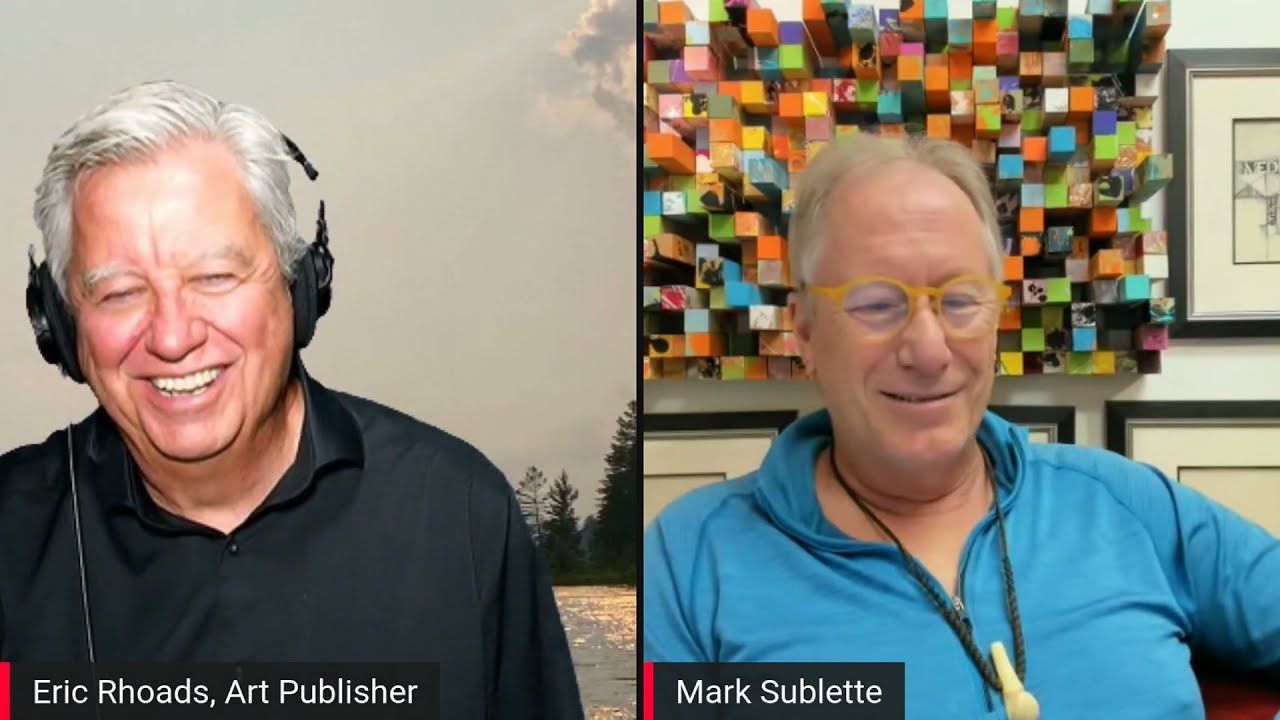
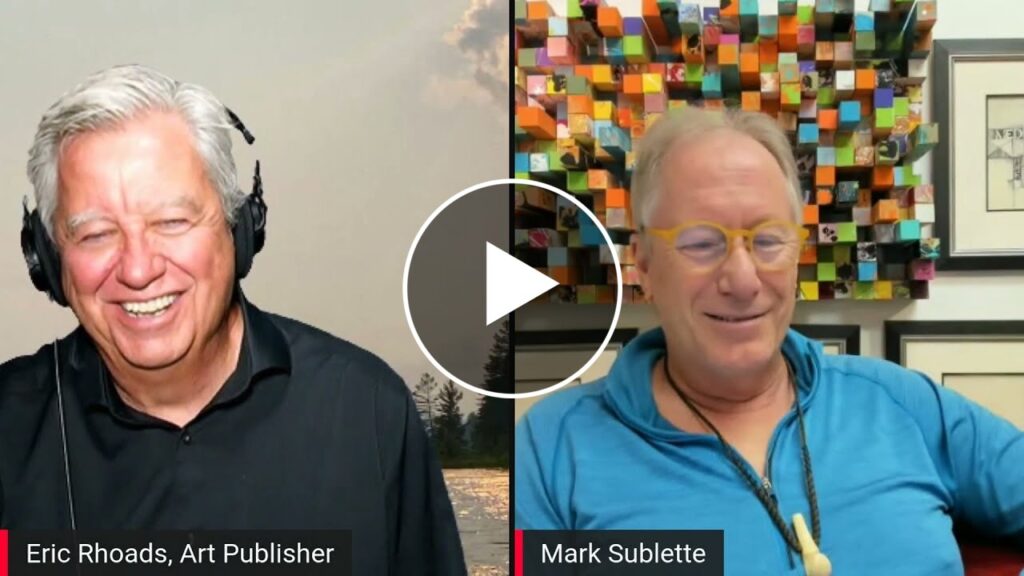
If you’re working with several art galleries, how do you decide which gallery gets which paintings? Are there businesses that hire freelance plein air painters? Eric Rhoads answers with special guest Mark Sublette (of Medicine Man Gallery and Art Dealer Diaries podcast).

In the Art Marketing Minute Podcast, you’ll learn how to sell your art, how to market your paintings, and everything else you need to know in order to have a successful art career. Each episode answers questions from artists by host Eric Rhoads, author of “Make More Money Selling Your Art,” publisher of several art magazines and newsletters, and author of ArtMarketing.com.

Listen to the Art Marketing Minute Podcast: Episode 79 >

Submit Your Art Marketing Question:

What questions do you have about selling your art? Email Eric today at [email protected] (include your name and where you’re from) to hear your question answered on an upcoming Art Marketing Minute Podcast.

FULL TRANSCRIPT of the Art Marketing Minute:
DISCLAIMER: The following is the output of a transcription from an audio recording of the Art Marketing Minute. Although the transcription is mostly correct, in some cases it is slightly inaccurate due to the recording and/or software transcription.

Announcer
This is the Art Marketing Minute with Eric Rhoads, author of the Amazon best selling book, “Make More Money Selling Your Art.” In the marketing minute we answer your questions to help your art career brought to you by artmarketing.com, the place to go to learn more about marketing. Now, here’s your host, arts magazine publisher, Eric Rhoads.

Eric Rhoads
All right, well, we have a special guest with us today on the marketing minute Mark Sublette, who’s a gallery owner in Tucson, Arizona. is going to be on with us. For those of you listening on the marketing minute podcast, here’s a question from Ashton B. in Baton Rouge, Louisiana who asks, If you’re working with several Whoa, this is time good timing. If you’re working with several art galleries, how do you decide which gallery gets which paintings? Mark, you want to address that one? Well curse the committee, right?

Mark Sublette
Yeah, no, not necessarily. If they let for instance, let’s say they’re working with me and somebody that’s in let’s say, Jackson Hole, they’d be smarter to get the material that is related to the Jackson Hole area, ie the Tetons versus sending them Searles, right, send me soils, now they should have a working relationship with a gallerist. And they should be able to say, Oh, I do well, with this, I don’t do well with that. And then the other thing is that, if let’s say they’re, you paint the same kind of subject matter, and it’s the, the galleries are not, you know, really different in the locations, who’s doing the better job for you, right? I mean, reward the galleries that are making the sales and promoting you, whoever that is, if, if you have one gallery that’s doing really well, for you, they should get more I mean, until the other gallery steps up, and does well or comes to you and says, Hey, I’m going to do this, I’d like to get more paintings, you know, and here’s my plan. If they’re not doing that, if they’re just saying, Give me stuff, then go with the person who’s doing a better job,

Eric Rhoads
or you ever get a painting, somebody sends you a painting and you cringe when you see it, and you wish that you didn’t even have to worry about selling it or do you, you know, did not hang it? Or how do you deal with a situation like that?

Mark Sublette
Unfortunately, most of my artists are so good that you know that even a painting that I might not particularly care for. Usually sells, but you know, I had one that was I got that was a subject matter. It just seemed like there would be no way I could sell it. But somebody found it. Perfect for them. Because that’s what the subject they liked it. Yeah. And so you just don’t know Don’t you know, realize that just because your taste as a gallerist might be x, some subject matter may be quite desirable that you just don’t recognize. So I let every No, I don’t ever really tried to push my artists to do extra this. I just say give me your best work. I’m happy.

Eric Rhoads
Yeah, yeah, I would say, you know, what I do is I send pictures first. I’ll say I’ll pick somebody that I think it’s a fit for, and I’ll send it to them. And I’ll say, is this something you want? And sometimes they’ll say no, sometimes they say yes. And so I think that right off the bat kind of solves that problem. And, and then you know, and I think the regional thing is huge. Right? You know, Adirondack paintings don’t do well in the desert.

Mark Sublette
Nope. Not send those to you.

Eric Rhoads
Yeah, that’s right. All right. So the next question comes from Joe Eisenhart in Cheyenne, Wyoming, speaking to the west Joe says, Are there businesses that hire freelance plein air painters? I’ve never heard of that. Well, I have heard of that. Actually. I’ll try to address that first. There’s a big thing right now. plein air weddings. I’m hearing from and seeing a lot of people doing this where they’re hiring a plein air painter to come in and paint at a wedding or at a reception. It’s kind of a kind of a thing right now and artists are getting paid. And one artist told me they got flown to France. This is pre COVID they got flown to France, and they got they were paid some ridiculous amount of money because weddings, you know, people like to spend money. And they did a painting of the wedding while it was taking place. And you know, usually what they do is they go in there and they kind of paint in all the background and everything first and then you know, they paint their figures in last when the weddings going on. I’ve never heard of businesses hiring freelance plein air painters, what about you, Mark?

Mark Sublette
Never heard about it ever. But I think that’s a great idea for the for the weddings. I think you could make a complete career doing that, if you like those kind of things. I mean, it would be I could see it, I can definitely go see it. But no, I’ve never heard of it.

Eric Rhoads
No, I never have either. But I think there’s you know, there’s something interesting in that there is somebody who pointed out to me that they put themselves out there in their in a convention city like San Diego or something and they they do these plein air retreats, if somebody is coming in for a convention and they want to company bonding meeting, you know, they’ll set them up with 40 or 50 easels, they’ll give them a lesson and, and they you know, they make good money from that. But that’s that’s an interesting question. It raises some good ideas.

Well, this has been the art marketing minute with me. Eric Rhoads. My goal in life is to eliminate the idea of the starving artist to help your dreams actually come true. So if you want to submit questions, simply email [email protected]. And to learn more about marketing ideas, you can visit Artmarketing.com. Thanks for listening.

How to Submit Your Art Marketing Questions: What questions do you have about selling your art? Email Eric today at [email protected] (include your name and where you’re from) to hear your question answered on an upcoming Art Marketing Minute Podcast.

By |2024-02-28T11:01:43-05:00August 9th, 2021|Art Marketing Minute Podcast|0 Comments

Art Marketing Minute Podcast: Episode 78

How do you negotiate to sell your art in a restaurant? What’s the best way to get local museums interested in your work? Eric Rhoads answers in this week’s Art Marketing Minute Podcast.

In the Art Marketing Minute Podcast, you’ll learn how to sell your art, how to market your paintings, and everything else you need to know in order to have a successful art career. Each episode answers questions from artists by host Eric Rhoads, author of “Make More Money Selling Your Art,” publisher of several art magazines and newsletters, and author of ArtMarketing.com.

Listen to the Art Marketing Minute Podcast: Episode 78 >

Submit Your Art Marketing Question:

What questions do you have about selling your art? Email Eric today at [email protected] (include your name and where you’re from) to hear your question answered on an upcoming Art Marketing Minute Podcast.

FULL TRANSCRIPT of the Art Marketing Minute:
DISCLAIMER: The following is the output of a transcription from an audio recording of the Art Marketing Minute. Although the transcription is mostly correct, in some cases it is slightly inaccurate due to the recording and/or software transcription.

Announcer:
This is the Art Marketing Minute with Eric Rhoads, author of the Amazon best selling book, “Make More Money Selling Your Art.” In the marketing minute we answer your questions to help your art career brought to you by artmarketing.com, the place to go to learn more about marketing. Now, here’s your host, arts magazine publisher, Eric Rhoads.

Eric Rhoads:

I am working on another book and I’ll get that done one of these days but in the meantime, if you haven’t got my book, Hey, you know what to do. In the marketing minute I try to answer your marketing questions you can email your questions to me [email protected] Steve from San Francisco in the Bay Area says I have recently been painting on the coast near a lodge and associated restaurant after linking the lodge on my Instagram post from the previous week and asking my permission to paint on the grounds. They remembered my Instagram posts later while painting the lodge manager came by and expressed interest in hanging my paintings in their cottages. How cool is that? So we set up a meeting and I’ll be bringing a dozen framed paintings to show her we briefly discussed a range of possibilities from purchase to commissions to hanging the paintings with sale signs and to the best of my knowledge the lodge and restaurant are not showing any other artists can you offer any negotiating arrangements and ways to parlay this opportunity? Well you know I’m not big on you know negotiation games. I think you know just kind of say what’s on your mind but you know hold back a little bit you know, you don’t have to put dump all your candy in the lobby so to speak. And decide the outcome that you most want you know there is a desirable outcome you could leverage this in a lot of ways you could you could make money from it, you could get more money from it by showing paintings you could do a lot of other things so do you want a bulk sale to the hotel? Do you want them to put your paintings in every room? Do you want to show in the hotel and if it’s in the hotel you want to show where do you want to in the lobby or in the rooms Well, if the if the rooms are going to see it but everybody can’t see every painting then you’re going to reduce your possibility of sales. I think so. I think you know you could do both but I would suggest that you try something like first off. Tell them that you will not hang paintings in rooms that are for sale because it’s too risky for damage or theft or otherwise. If they want them in their rooms then they could cut a deal for a bulk amount of paintings you know let’s say you’ve got 30 rooms and they want 30 paintings. You could do that or you know if they’re not going to go for that you might be able to say well we could do prints and you could cut a deal for prints and then you’ve still got the paintings you can sell.

And so that’s nice because you could give them giclee prints framed at a lower price. But asked him to do a lobby shore restaurant show for three four months and especially at the peak of their season. And people who see them in the room will also want prints or originals you want to sell prints in the gift shops. I sold paintings in the gift shop of a very high end Hotel in Lake Placid for many many years. And you know they sold and they sold well and they sold for a lot of money just because It’s a gift shop, you know, if it’s a high end hotel, somebody who’s paying a high price, they don’t seem to care. But people want to be able to buy on the spot, you know, you see art shows where it’s like, you see this painting and contact the artist and it’s like, No, I’m not going to contact the artist have had a couple of drinks, I don’t want to do that, you know, you might intend to you take a picture of, of the of the artist tag or something, by the way, make sure you put one of those little QR codes on your tag and say, take a picture of this with the painting and that way they remember the QR code comes up and they can contact your website. But I would rather they be able to say, you know, to purchase this painting, tag this tag into the store, and the gift shop and do it that way. Sell small paintings, they can throw in a suitcase, or a car for their their memory of their trip, also have a big monumental painting in the lobby for sale now don’t offer discounts unless they ask keep saying no on discounts. And at some point you may have to cave but I suggest that you, you know, if you buy 10 paintings, I’ll give you a discount of 10% of you by 20. I’ll give you a discount of 20%. You know, that kind of thing. If you want all the rooms, I’ll discount it by you know so much. But you start without discounting. Because why give money away? You might not have to. The next question comes from Ray Richardson in Kannapolis, North Carolina Who says I’m doing a lot of vehicle art trains, aircraft, boats, etc. And I’d like to approach museums with my work either for consignment or display in their gift shops. I talked to one but I’m not sure I went about it properly. What’s the best way to get local museums interested in my work? Should I just sell the original art to them? And allow them to resell? I don’t have prints made yet I prefer getting the original art in the shops. Is this a smart move? You know, Ray, there’s no right or wrong. I mean, you can you can go about this in any particular way. The idea here is, you’ve got to ask yourself why this is important to you, you know, is somebody going to a museum, going to go into the gift shop and spend a proper amount of money for a painting now they might or they might not. And it’s certainly worth testing. My goal is to test everything. So you could do you know, you could certainly do prints, people will buy prints, you know, people buy memories of something. What would be nice is to get a show in the museum if you could get a local museum to do a show and then put your work in there. And then keep your work in there. That would be kind of cool. But you know, ask yourself, you know, what is your goal? What What do you most want to do? Do you want to sell paintings? Do you want to get your paintings displayed, so other people will buy them in other venues? You know, ask yourself, What is your goal and then start with your goal in mind and then work towards that goal, whatever the goal is. But yeah, I mean, you know, you said you you don’t know if you went about it properly, you know, we’re gonna make mistakes. We all make mistakes, but, you know, make sure you’re calling back. You have a discussion with somebody, no, don’t, you know, let grass grow under that, you know, call him back, say, Hey, we had a discussion. I don’t know if it went well. Tell me what your thoughts were. And they’ll tell you I mean, you know, just don’t plan a games Be smart with them. And I think that will help. Anyway, that is the marketing minute.

Well, this has been the art marketing minute with me. Eric Rhoads. My goal in life is to eliminate the idea of the starving artist to help your dreams actually come true. So if you want to submit questions, simply email [email protected]. And to learn more about marketing ideas, you can visit Artmarketing.com. Thanks for listening.

How to Submit Your Art Marketing Questions: What questions do you have about selling your art? Email Eric today at [email protected] (include your name and where you’re from) to hear your question answered on an upcoming Art Marketing Minute Podcast.

By |2024-02-26T14:28:50-05:00July 26th, 2021|Art Marketing Minute Podcast|0 Comments

Art Marketing Minute Podcast: Episode 77

Is it okay to sell paintings at a higher price than other artists? What are some ways you should be networking locally? Eric Rhoads answers in this week’s Art Marketing Minute Podcast.

In the Art Marketing Minute Podcast, you’ll learn how to sell your art, how to market your paintings, and everything else you need to know in order to have a successful art career. Each episode answers questions from artists by host Eric Rhoads, author of “Make More Money Selling Your Art,” publisher of several art magazines and newsletters, and author of ArtMarketing.com.

Listen to the Art Marketing Minute Podcast: Episode 77 >

Submit Your Art Marketing Question:

What questions do you have about selling your art? Email Eric today at [email protected] (include your name and where you’re from) to hear your question answered on an upcoming Art Marketing Minute Podcast.

FULL TRANSCRIPT of the Art Marketing Minute:
DISCLAIMER: The following is the output of a transcription from an audio recording of the Art Marketing Minute. Although the transcription is mostly correct, in some cases it is slightly inaccurate due to the recording and/or software transcription.

Announcer:
This is the Art Marketing Minute with Eric Rhoads, author of the Amazon best selling book, “Make More Money Selling Your Art.” In the marketing minute we answer your questions to help your art career brought to you by artmarketing.com, the place to go to learn more about marketing. Now, here’s your host, arts magazine publisher, Eric Rhoads.

Eric Rhoads:

In the marketing minute I answer your art marketing questions you can email them to me, I hope you’ll do that. Here’s one from Jen in Ohio who says I’ve recently decided to sell my art congratulations. And I’ve been doing research on pricing structures for my paintings. I know it’s important to research the market. But a lot of other paintings, I find her price fairly low, going between five and $800. I don’t understand how they can possibly make a living off their paintings. Even if they sold all of them the price point that I found in order to make reasonable salary seems to be in the two to $7,000 range for moderate sized paintings. Is it okay to sell paintings at a higher price than other artists? Well, there’s a whole lot of stuff in there, Jen. And let’s just kind of go through them one thing at a time. First off, every artist has to start somewhere now. You can. There’s a lot of stories. I remember asking George Carlson how he got his prices so high. So he said, Well, I don’t know, ask my wife. And I asked her and she said, Well, I just took the amount of time that he puts in how much we needed, and divided that by the number of paintings. And so that’s how they did it. But George was already famous as an artist as a sculptor. So he had a big brand, your brand matters, the more that people know, you respect you trust you, and understand who you are, the more your price goes up. I mean, think about Hollywood, right? There’s, you know, Brad Pitt, he’s probably getting top dollar or George Clooney top dollar. And then there’s, you know, some upstart, young and young upstart artist or, or what am I looking for actor who, you know, they’re just kind of getting internet, so they’re getting union scale. So you just have to understand that you’re gonna have to ratchet it up. Now, I do have some interesting feelings about that. And, and, you know, you know, that there are people out there who are selling too low. And you know, you’re you can’t help that you can’t worry about what other people are going to do. You know, people might compare or they might not, it depends on the environment. So environment is everything, if you’re in a really great gallery, a great gallery, that st, selling for fairly high prices, and then you’re likely to be able to get a higher price in a gallery like that. But that gallerist is going to give you advice, a gallery knows their market better than anybody. And they’ll say, well, maybe we’re going to start you out at this price. And then we’re going to ratchet you up over five years to this price, and this price, and so on. Now, you could just, you could say, Alright, I want to make a certain amount of money a year, but you got to be practical about that. And this may or may not work for you. Because again, it’s about advertising and building your brand and being known and so on. That stuff really matters. But let’s just say you took you said alright, I want to quit my job. And I’m making $50,000 a year, and I need to make $50,000 a year as an artist, well, then you got to ask yourself, right? How many paintings? Can I paint and be good quality? How many can I do per month? And if you say, Well, I can only do two per month, and you know that you’ve got to have $4,000 a month, then, well, you got to have $2,000 a painting, right? Well, the problem with that is that you don’t really know that because if you’re selling a direct, then you get to keep both of those $1,000. Right? If you’re selling it through a gallery, then you only get to keep half of it. So that means you probably need four paintings. But, I turn to my galleries for pricing, because I would love to get high prices. And I think high prices, send signals. And I’ve got a whole lot of stuff about that in my book. But the idea here is that they know their market. So if I just recently sent a painting to my gallery, and I said, What should I charge for it? And he sent me a note, I sent a painting to my other gallery I said, What did you charge for that same painting size? Because I I had forgotten or didn’t know. And, and she sent me the exact same number. So when I heard two people say, well, that’s the number. Well, that’s pretty good. Now, I’m not the best artist in the gallery. And there are artists in the gallery that have the same size painting, and they’re getting, you know, twice, three, four times what I’m getting, because maybe I’m not as famous as they are, or not as accomplished as they are. So there’s a lot of factors into it. So you know, if you if a reasonable salary seems to me a two to $7,000 range for moderate sized paintings, you know, if you’re taking a nine by 12, and saying you want $7,000 for that painting, it might be difficult, especially when you’re starting up. But if you get established, it might be a too low. So take it easy, take it slow. Now if you have a job, I have a video out that talks about how to I don’t even remember what its title is we’ll have to look that up. But it’s an art marketing bootcamp series. And it’s how to quit your job and become a successful full time artist. And and it basically talks about a system for ratcheting up and getting … you don’t want to just go cold turkey, you want to get some experience and you want to get out there and try selling some things before you just quit your job right because you want to get to the point where you’re making enough money with your art that you can quit your job. Anyway, I hope that helps.

The next question comes from Aryana Husselink in Indianapolis, Indiana. I’m from Indiana. And hustling sounds like a good German Name, that’s a good Indiana thing. Aryana says, I know it’s important to be online. But what are some ways that I should be networking in my local community? I think that’s a great question. The first thing to understand, and I think everybody needs to understand this. And that is if all of your marketing is dependent on a single thing, and that single thing no longer works, then you’re in trouble, right? So a single thing might be if you’re selling all your paintings through one gallery, and that gallery closes down, you’re in trouble. So you got to have two or three galleries, ideally, to have some balance, but what if all the gallery business dries up? You know, and so alright, so you’re doing some social media strategy. And by the way, there’s a whole lot of misunderstanding about that. I talked a lot about that in my book. And so you want to have other things like, you know, you’re networking, you can sell a lot of paintings through networking, and networking in your local community is really a good thing to do. So what what are some of the ways? Well, I have in I think, in my book, I, somewhere I wrote, I think it’s in there a whole chapter on this kind of thing, and networking and taking charity work to the next level, and so on. I like to do things like I like to donate paintings to charities, for silent auctions, I will do that from time to time, I don’t have very many paintings anymore, because I don’t have a lot of time, but I have done it. But when I do it, I say look, I’m going to give you I’m not just going to give you a small painting, I’m going to give you a big one, that’s worth a lot of money, so you can advertise it. And so let’s say I’ll get my painting worth $10,000. And they can put, I’ll say, Look, I’ll give you this painting on the condition that you put me as a highlighted, you put my painting on the postcards, you send out the top of your website, you put my name on it, you introduce me at the event, and maybe even have me say something for five minutes, because I want to get something out of that. Because if I say something, all of a sudden, I’m a magnet in the room. And I have all these people that will talk to me otherwise, you know, it’s harder to do that. But I you know, I think charity events are good. There’s all kinds of events, there’s school events. What you want to do, though, is you want to stand in the river where the money is flowing as my saying and I think the idea is that the river where the money is flowing is where people have money to spend, right? So if you’re doing a silent auction in, in something that’s just, you know, let’s say it’s to raise $300, for the kindergarten, you’re not going to make any money on that. Now that’s okay, you might get visible if it’s a, if it’s a school where there’s a lot of high end people, and it can’t hurt and it’s good experience to try. But you know, I want to go if you know there are charities trying to raise big money. They’re trying to get all the wealthy people in town together, I want to be in that auction because I want those people to get to know my name. And I want to do 10 or 20 or 30 of those auctions, you know, some cities like Palm Beach, for instance, big auction town, they have lots of lots of events going on in the wintertime. So people go to an event every night. So if you had if they saw your name at event after event after event after event and at high prices, all of a sudden you’ve packaged yourself as a high price person and then that affects your pricing to the previous question that that might help. Anyway, I hope that kind of gives you an indication but yes, absolutely. Look for different ways you can network in your community and remember to stand in the river where the money is flowing.

Well, this has been the art marketing minute with me. Eric Rhoads. My goal in life is to eliminate the idea of the starving artist to help your dreams actually come true. So if you want to submit questions, simply email [email protected]. And to learn more about marketing ideas, you can visit Artmarketing.com. Thanks for listening.

How to Submit Your Art Marketing Questions: What questions do you have about selling your art? Email Eric today at [email protected] (include your name and where you’re from) to hear your question answered on an upcoming Art Marketing Minute Podcast.

By |2024-02-19T07:38:10-05:00July 19th, 2021|Art Marketing Minute Podcast|0 Comments

Art Marketing Minute Podcast: Episode 76

In the Art Marketing Minute Podcast, you’ll learn how to sell your art, how to market your paintings, and everything else you need to know in order to have a successful art career. Each episode answers questions from artists by host Eric Rhoads, author of “Make More Money Selling Your Art,” publisher of several art magazines and newsletters, and author of ArtMarketing.com.

How can you overcome shyness when painting in public? What can artists take away from the pandemic? Eric Rhoads answers in this Art Marketing Minute Podcast. (Originally published July 12, 2021)

Listen to the Art Marketing Minute Podcast: Episode 76 >

Submit Your Art Marketing Question:

What questions do you have about selling your art? Email Eric today at [email protected] (include your name and where you’re from) to hear your question answered on an upcoming Art Marketing Minute Podcast.

FULL TRANSCRIPT of the Art Marketing Minute:
DISCLAIMER: The following is the output of a transcription from an audio recording of the Art Marketing Minute. Although the transcription is mostly correct, in some cases it is slightly inaccurate due to the recording and/or software transcription.

Announcer:
This is the Art Marketing Minute with Eric Rhoads, author of the Amazon best selling book, “Make More Money Selling Your Art.” In the marketing minute we answer your questions to help your art career brought to you by artmarketing.com, the place to go to learn more about marketing. Now, here’s your host, arts magazine publisher, Eric Rhoads.

Eric Rhoads:

So thanks again, Jim. In the art marketing minute I try. Sometimes I Well, I always answer your questions whether or not I do a good job. That’s another story. But I try to answer your questions you can email your questions, [email protected]. I love questions. And what I do is I just kind of read these as we go and I make up the answers off the top of my head. I don’t have any prepared answers. Because I think I work best that way. This is coming from Derrick Jones in Syracuse, New York who says I’m new to painting outdoors. I’m very shy. When people come up and watch while I’m trying to paint I get nervous because they don’t like my I don’t feel like my work is good enough for others to see yet. How do you overcome that? Well, you know, that is a huge topic, Derrick. First off, it’s a self esteem thing, right? We don’t feel worthy, because, you know, we maybe are not painting as well as quite aspa vague, you know, the great, the great client aspect, and or maybe not even as well as some of our friends. But every painter goes through that that is a process. And we all have to knock out a lot of bad paintings before we start knocking out some good paintings. And even those who have been doing it a lot of years will still knock out bad paintings from time to time. And by the way, there’s not a bad painting because every painting is a lesson. So here’s how I dealt with that particular issue. First off, I first off, when I first started painting, I just kind of went and painted places where there were not people because I just didn’t want to be around people who were critical. The next thing I did is I as I was painting around people, I took some earbuds, some iPod earbuds or whatever. And I stuck them in my pocket, you know, put them my ear stuck in my pocket as if there was a player in there. And surprisingly, not very many people would bother me when I’m doing that. But you know, there are always going to be somebody who is going to some somebody is going to come up and talk to you about it. And I used to make excuses. I remember I was standing up, I was painting Notre Dame Cathedral in Paris, and I was on the corner. And this is before it burned down. And there were a bunch of teenagers and they’re all gathered around watching me there are 10 or 12 of them. They’re all speaking French and laughing and making fun of me and stuff. It was a little uncomfortable. But they were nice kids, they weren’t going to beat me or anything. And one of the kids came up and said in English. He said you should give up painting, you’re not very good. And I said, Well, thank you for that encouragement, but I’m, you know, I’m doing what I call a study, I will take this information and then I’ll go and do a more in depth painting at home. And you know, I just you know, what can you say? I mean, some people aren’t going to like it, some people are going to be critical. Sometimes I would say well, you know, I’m, I’m just getting started, you know, come back in a couple hours and see how I do. But you know, you just have to you just have to live for yourself. You can’t live about how others think. And so, I will tell you this that your self talk makes a huge difference. If you constantly are telling yourself you’re not doing a good job, guess what will happen. You won’t be doing a good job. If you constantly tell yourself you’re doing a good job, you’re learning you’re growing, you don’t care what happens you just are going to make it the best you feel you can make it today. You know I have I’m looking around my studio here I have dozens and dozens of paintings on the walls and their studies that I’ve done in each one as a memory. Some of them are good paintings, and some of them are not so good paintings, but each one is a memory. Each one gave me a lesson and so there was value in every single one of them. So just embrace it for what it is, it’s not really a big deal. So you’re not unlike others. The best way to overcome it, though, I’ll tell you that I had a guy by the name of Michael ringer. He’s a great artist, or great watercolor artist, but does many other mediums as well. He came to visit me and I’m kind of walking him through the house. And every time we’d encounter a painting, he’d asked about it, and I would make some excuse. And then we went for a boat ride. And then he came back and I put him to a tech took him to his car. And before he got in his car, he said, Eric, I want to talk to you about something. I said, Yes. And he said, Listen, you did a lot of apologizing for your work. You don’t need to apologize, you’re a good painter, you have a lot of potential. And yes, there are some growth that you need to go through. He said, but you know, you’re doing better than I was at this stage of your career. So just Quit complaining about it and quit apologizing if it’s gonna impact your head. And you know, when the fact that he cared enough to stand out and say something like that really meant it. And so I’ve been very careful to try and stop making excuses. And just let it be what it’s going to be. But if you want to avoid the crowds, in the beginning, I understand that, you know, there are people who have said to me, Well, I don’t want to come to the plein air convention, because I’m not good enough. But you know, everybody there has been through it. Everybody there has made bad paintings, including many, many of us, all of us, actually. And so you know, we’re all we understand that you’re with family there, you’re not with consumers who are going to give you a hard time you’re with people who are going to give you love and say, hey, you’re you’re okay, you know, you’re you’re doing a great job. And you know, just tweak this do this but a little more dark in the foreground or bigger shapes or something, you know, a lot of those things will make a big difference.

Here’s the next question comes from Hunter Smith in Los Angeles, California. Hunter says, looking back and forward, do you think there’s anything we can take away from the pandemic in regards to making a living as an artist? Man, tough question. Hunter, I think that the pandemic is the best thing to ever happen to me. And thankfully, I’ve lived through it so far, and hopefully will continue to. But the I think the idea here is that I learned a lot about myself, I learned about my priorities, what I want to do what I don’t want to do what I want to spend my time on, I want to spend more time with my family, I actually have enjoyed the time at home, I’ve been working harder. And but I had to kind of you know, rebound and come up with some new ways to make a living like my 12 noon Daily Show and on Facebook and YouTube. And, and so I think that a lot of artists have said, you know, this is has been really good for them, because they’ve, they’ve gotten off the circuit off the merry go round, and they’re not traveling around as much. And they’re, they’re focusing on their painting. And so a lot of them have said, You know, I learned a lot as a painter, I grew a lot as a painter, because I was painting more I was painting in on erupted, I wasn’t tempted to you know, get in the car and go get stimulation by you know, going and getting, you know, some shopping or something in and so I think you know, from that standpoint, we’re all better. I think in terms of making a living as an artist. First off, a lot of artists are telling me they’re selling more art than ever, because other people are starting to appreciate more art more and also look at their walls and say, Hey, I need something there. I think in terms of making money as an artist, you what you’ve got to do, and maybe what the pandemic will do for you is it will set your priorities. Ask yourself, what am I willing to do? What am I not willing to do? Am I painting for myself? Am I painting for others? Am I doing both? Am I in a position to kind of focus on what I want to do? You know, life’s too short, I had friends pass away, you probably did too. And life’s too short, you know, suddenly, people who thought they’re going to be around forever are not going to be around forever. And so ask yourself, if I always do this in my seminars I did this way before the pandemic, I do this on my videos and stuff and ask yourself, if you only had you know, you went to the doctor, and you only had one year left? What would you do with that one year, because that’ll help you crystallize your thinking. And then the other thing I do in some in my book and some other things, I asked you to write your own obituary, and write what you’ve done, and then write what you want to get done as if you’ve done it. And then that’ll help you crystallize what it is you really need to do. You know, it might be about selling paintings, it might be about giving away paintings, it might be about getting recognition, you have to determine what is it that’s important to you, is it a living you need to make is it recognition you need is it helping others you want to do so I think in those terms. And then now that you’ve crystallized your thinking, then you have to say Okay, how do I get there? And whatever it is you decide how do I get there, everything starts with a goal. And then a goal leads to a plan a goal sets your strategy. And then a plan sets your tactics, a strategy is the overarching thing that you’re trying to accomplish. The tactics are how you accomplish them tactics are things like advertising or social media or doing shows etc. And, and then you have to ask yourself, you know, how busy do I want to be? how, you know, how much money do I need to make? If you start with the questions, you always come up with the answers and, you know, you got to spend a lot of time thinking, but thinking is where all the answers come from, right. It’s just don’t do it routinely, you know, I sometimes will spend 10 1215 hours thinking about a particular topic. You know, when I went on vacation, I had 60 pages of notes of my thinking, I read four books, three or four, four books. And I took one online course, in a particular area of marketing that I wanted to learn more about. And so and then my thinking really started happening as a result of that. So I think that you’ve got to just kind of figure out where you want to go and then how to get there. I mean, that’s, that’s the bottom line.

Well, this has been the art marketing minute with me. Eric Rhoads. My goal in life is to eliminate the idea of starving artists to help your dreams actually come true. So if you want to submit questions, simply email [email protected]. And to learn more about marketing ideas, you can visit Artmarketing.com. Thanks for listening.

How to Submit Your Art Marketing Questions: What questions do you have about selling your art? Email Eric today at [email protected] (include your name and where you’re from) to hear your question answered on an upcoming Art Marketing Minute Podcast.

By |2024-02-12T07:41:18-05:00July 12th, 2021|Art Marketing Minute Podcast|0 Comments

Art Marketing Minute Podcast: Episode 75

In the Art Marketing Minute Podcast, you’ll learn how to sell your art, how to market your paintings, and everything else you need to know in order to have a successful art career. Each episode answers questions from artists by host Eric Rhoads, author of “Make More Money Selling Your Art,” publisher of several art magazines and newsletters, and author of ArtMarketing.com.

What are the top “don’ts” for selling art? What should you include in your artist bio? Eric Rhoads answers in this week’s Art Marketing Minute podcast.

Listen to the Art Marketing Minute Podcast: Episode 75 >

Submit Your Art Marketing Question:

What questions do you have about selling your art? Email Eric today at [email protected] (include your name and where you’re from) to hear your question answered on an upcoming Art Marketing Minute Podcast.

FULL TRANSCRIPT of the Art Marketing Minute:
DISCLAIMER: The following is the output of a transcription from an audio recording of the Art Marketing Minute. Although the transcription is mostly correct, in some cases it is slightly inaccurate due to the recording and/or software transcription.

Announcer:
This is the Art Marketing Minute with Eric Rhoads, author of the Amazon best selling book, “Make More Money Selling Your Art.” In the marketing minute we answer your questions to help your art career brought to you by artmarketing.com, the place to go to learn more about marketing. Now, here’s your host, arts magazine publisher, Eric Rhoads.

Eric Rhoads:

Thank you and the marketing minute I answer your marketing questions you can email yours to me [email protected] I need a jingle Artmarketing.com What a great way to drive listeners away. Okay, here’s a question from Kevin Palmieri in Dover, Delaware, who asked what are your top don’ts for selling art? Well, it’s Kevin, I don’t like to thrive on negatives. I never really thought about that. But let me see if I could come up with a couple. I think a lot of us suffer from what’s called imposter syndrome. So don’t get imposter syndrome that imposter syndrome is when you don’t feel worthy. I went through that my first time at a gallery. It was in this gallery in Santa Fe and the first time I was there. I was like, Why? Why are they putting me in the gallery. I mean, I don’t really deserve this. I took my paintings. It was really nervous. We hung up and we I just was nervous. Totally nervous. I didn’t feel deserving. And you got to get past that. So don’t have imposter syndrome. You got to overcome these kinds of things in your head. I think another thing, just a personal thing. Don’t paint too small. You know, the painters Bakkies the plein air painters Bakkies paint bigger than the plein air painters on the other side of the country. I don’t know why it is it probably has to do with Redfield or one of those artists but you know, they use these great big ticket easel ease easels, these great big, you know, 230 by 40 is on location, and they’ll do them within about the same amount of time. And one painter back he said, You know, I don’t know how these painters make any money, you know, because you know, selling all these nine by 12 paintings when you sell 30 by 40, you know, for a couple hours work, you make some really big money. So I don’t know, I think that’s just something to consider. Don’t have mindset issues. mindset is the big killer of everything. You know, it’s not just imposter syndrome, but it’s, you know, telling yourself that you’re not worth the money. And that kind of goes to pricing. Don’t underprice artists tend to kind of be a little shy? Well, I wouldn’t pay that much money for it. So why would somebody else, you got to keep yourself in perspective, you know, somebody who can I have friends who could walk into an art gallery, and drop $250,000. And it would hurt them about as much as if we pulled a 20 out of our wallet. And so there are people out there that think differently than you and if they see something and it’s underpriced. It has a negative impact. So let me give you an example. I had I was doing my art marketing bootcamp at the convention one year, this guy raised his hand and he said, Listen, I got a story for you since I was at an art show. A woman walked in. She said, I love that painting, how much is it? And he said, it’s $4,000. She said, I’ll take it, she writes him a cheque hands him a check for $40,000. And he said, Oh, ma’am, you added one too many zeros. It’s not $40,000. It’s $4,000. And she said, Oh, it must not be very good. And she wrapped up the check. True story. You see, price is equal to value in some people’s minds. You know, if somebody is a fluent, super fluent, they don’t want a $4,000 painting, they want a $40,000 painting, you would think you know, wow, it’s a great painting, I can get it for four instead of 40 that would be the mindset. That’s not how some people think so just I’m not saying you should price your stuff. You’ve got to work with your gallery owner if you’ve got one and work with them on pricing, and they’re going to tell you, here’s the price I want to get and then we’re going to establish your pricing we’re going to get higher and higher and higher over time and listen to them they know what they’re doing typically but I you know, other than that, I don’t know what not to do. I you know, read my book, my book will probably tell you all the things to do and that’s where we want to focus our attention is the the the positives.

Our next question comes from Joshua Moran in Santa Fe, New Mexico, who asked What’s best to include in my bio, my biography? And what should I leave out? Well, first off, what’s the purpose of a biography? You got to ask yourself that, why have a biography? Well, the biography is to set the tone about the artist. Now, I don’t ever recommend lying to anybody. Lying is not fruitful. It’s going to catch up to. But I do think what you can do is you can create a sense of, of brand or something that feels exotic, you know, people who buy art oftentimes are living vicariously through people like us, you know, i, you and i both know, artists who do some pretty crazy things, they climb mountains, and they go, they fly in places and helicopters, and they, you know, they adventure in on mutual pack trips, and things like that. That stuff is what sells. And so if you’re boring, and you don’t have any of that stuff, then just be boring. But if you have any of that stuff, you know, I don’t, I don’t know if anybody really cares much about anything but your painting career, you know, you could say, you know, Eric is a, you know, Eric is a former heart surgeon, who was, you know, did heart surgery for 30 years, but his big passion was learning to paint and he learned to paint and he went out plein air painting. And now he does, you know, helicopter trips into the high Sierras and tries to capture places that no one gets to go in person. You know, stuff like that is what really matters. And the other thing that people want, especially galleries is they want things that show what I call social proof. Social proof is something that says that you’re good, right? So social proof might be that you won the plein air salon landscape category in March of 2021. And they might want to say you were featured in a magazine article or you’re featured in a book, or you won this award of that award, a blue ribbon at this event, etc, list all that stuff, because that gives you credibility. It’s social proof. And social proof says the reason you want it is because people want to know that they’re buying somebody who’s good. And because people are insecure about paintings, and even though this is not necessarily quote unquote, investment, because some people think that way. Most people don’t. They, you know, they are asking themselves is this person in a good you know, I’m writing a check for $4,000 or 2000, or 500, or whatever the number is, it’s all relative to different people. So just make sure that you’re doing things that create social proof credibility. If you have quotes from famous people, you know, who are collectors or famous curators or something put those in there. You know, Jean Stern, former director of the Irvine museum says this about you and that kind of thing can be golden.

Well, this has been the art marketing minute with me. Eric Rhoads. My goal in life is to eliminate the idea of the starving artist to help your dreams actually come true. So if you want to submit questions, simply email [email protected]. And to learn more about marketing ideas, you can visit Artmarketing.com. Thanks for listening.

How to Submit Your Art Marketing Questions: What questions do you have about selling your art? Email Eric today at [email protected] (include your name and where you’re from) to hear your question answered on an upcoming Art Marketing Minute Podcast.


> Visit EricRhoads.com (Publisher of ArtMarketing.com) to learn about opportunities for artists and art collectors, including:

  • Art retreats
  • International art trips
  • Art conventions
  • Art workshops (in person and online)
  • And more!
By |2024-01-29T09:23:22-05:00July 5th, 2021|Art Marketing Minute Podcast|0 Comments

Art Marketing Minute Podcast: Episode 74

In the Art Marketing Minute Podcast, you’ll learn how to sell your art, how to market your paintings, and everything else you need to know in order to have a successful art career. Each episode answers questions from artists by host Eric Rhoads, author of “Make More Money Selling Your Art,” publisher of several art magazines and newsletters, and author of ArtMarketing.com.

Does your art website or newsletter need a catchy title? Are there any traps that artists can be aware of and avoid? Eric Rhoads answers in this week’s Art Marketing Minute Podcast.

Listen to the Art Marketing Minute Podcast: Episode 74 >

Submit Your Art Marketing Question:

What questions do you have about selling your art? Email Eric today at [email protected] (include your name and where you’re from) to hear your question answered on an upcoming Art Marketing Minute Podcast.

FULL TRANSCRIPT of the Art Marketing Minute:
DISCLAIMER: The following is the output of a transcription from an audio recording of the Art Marketing Minute. Although the transcription is mostly correct, in some cases it is slightly inaccurate due to the recording and/or software transcription.

Announcer:
This is the Art Marketing Minute with Eric Rhoads, author of the Amazon best selling book, “Make More Money Selling Your Art.” In the marketing minute we answer your questions to help your art career brought to you by artmarketing.com, the place to go to learn more about marketing. Now, here’s your host, arts magazine publisher, Eric Rhoads.

Eric Rhoads:

In the marketing minute I answer your art marketing questions yours can become part of the broadcast if you email me, [email protected]. We also have our own art Marketing Podcast. It’s the same content that we just push out as a separate podcast. And so if you don’t want to listen to plein air podcast, which you want the marketing, you can just go there. Now here’s a question from John O’Neill in Albany, New York who says I’m finally ready to start a website and a newsletter. My question is, does it need a catchy title or something that’s more direct? Like my name? Well, John, I think you know, in my book, make more money selling your art or whole a whole thing on websites. And that’s something you want to check out. But first off, everybody says, Well, I have to have a website, well, the web is changing, and things are changing a lot. Now, the question is, before you even create a website, you have to ask yourself, what’s my strategy? Why am I creating a website? What do I have? What do I hope to have happen with that website? Is my website, a branding tool, a way to show my artwork? Is it a way to sell my artwork? Is it all of the above? What is the 80%? Or what is the one thing that you really want to focus on and try to figure that out before you decide if you’re going to start a website, because, quite frankly, nowadays, you can kind of do almost the same thing with Facebook and Instagram. And there’s also a lot of other things that are trending. So you may want to ask yourself, Is this really necessary anymore? Now, there’s a lot of people out there that make great websites, and you know, you can kind of make your own through them. And some of them are art specific, and some of them are not, you’re going to have to decide what works for you. But do you need a catchy title or something that’s more direct? Well, catchy titles can be risky. You know, if you were, remember Thomas Kincade, the painter of light I mean, that was a catchy title. And but yeah, and then for a long time, everybody was, the painter of this and the painter of that, but I’m not so sure it really meant anything. You know, what you’ve got to do is figure out what is the focus on what do I really want to spend my time doing? The big mistake that I think artists make when they’re trying to market themselves, they try to be too many things to too many people, they try to do too many styles or they try to do too many subject matter. Figure out first what it is you want. So if you are going to be a catchy title, or if you’re maybe it doesn’t even have to be catchy. It might just be you know, John O’Neill, landscape painter, it might be john O’Neill, ocean painter, seaside painter, or whatever it is, you’re good at, you know something because we can’t all be good at everything and you want to kind of get known for something. So first thing I think is, put your name up there, John O’Neill and then then if you want to say I have a subhead, that is kind of an explainer, you know, a subhead explainer is like Coca Cola and then it’s is the real thing, right? So I don’t know if that means anything anymore. But it did it maybe at one time. So you got to think about that. But no, your name is fine. And people are going to Google your name and you want them to find you. And this is an opportunity to brand yourself. Now one mistake I think a lot of people make is they love they fall in love with their signature, and they put this big, unreadable signature at the top of their website. Now, that’s okay. That’s okay. If you also put your name on top of it in text that somebody can read. But a lot of people can’t read that stuff. Everybody thinks they can. And you know, there’s nothing worse than a signature that nobody could read, at least put your name on the back of the painting, too. We’ll have a whole nother thing on the back of the painting sometime. Anyway. Hope that helps.

Here’s a question from Jeffrey Skelton in Nashville, Tennessee, who says I’m always hearing about new scams. Are there any traps that artists can be aware of and avoid? Well, Jeffrey, I’m not the guy. You know, this is a marketing podcast. But let me just tell you what I know. And I don’t know much. But I have been approached many times. from someone, it’s always a different name. It’s always a different email. But the email goes something like this. I was looking at your website, I’m trying to find something really special for my wife for her birthday, or anniversary, you know, some particular thing. And I found a particular painting, I’d like to buy it from you. Can we make arrangements? And so here’s how the scam I’m told works. And that is that, you know, they they say they want to send you a check. And then you send them the painting, and then the check doesn’t clear. So first off, if they’re saying those words, chances are it’s a scam. But secondly, you know, you can hammer the cheque, you can go to the bank, and you can say, I’m not going to send this until the check clears. Now one of the other things they do is, they overpay. So let’s say your painting is $1,000 they send you a 15 $100. And then they sent you know, they send the check and then they overpay and then there’s some way that they cancel the check and they manipulate it or something. And as a result, they’re getting $500 cash out of that transaction when they had no intent of paying. If you want to read up on art scams, I would probably check out I think the FBI has an art scamming division. You might want to check that out. But you know, something sounds too good to be true. It is it always is. So just keep that in mind.

Well, this has been the art marketing minute with me. Eric Rhoads. My goal in life is to eliminate the idea of starving artists to help your dreams actually come true. So if you want to submit questions, simply email [email protected]. And to learn more about marketing ideas, you can visit Artmarketing.com. Thanks for listening.

How to Submit Your Art Marketing Questions: What questions do you have about selling your art? Email Eric today at [email protected] (include your name and where you’re from) to hear your question answered on an upcoming Art Marketing Minute Podcast.

By |2024-01-24T14:05:33-05:00June 28th, 2021|Art Marketing Minute Podcast|0 Comments
Go to Top